
Your agency sends the report. Rankings improved, impressions increased, and several pages received more visits. The charts look encouraging. You still need to know what the investment contributed to the business and what should happen next.
That is a reasonable expectation. An SEO report should help you evaluate progress, understand the remaining constraints, and make a better decision about your budget. A collection of favorable screenshots cannot do that by itself.
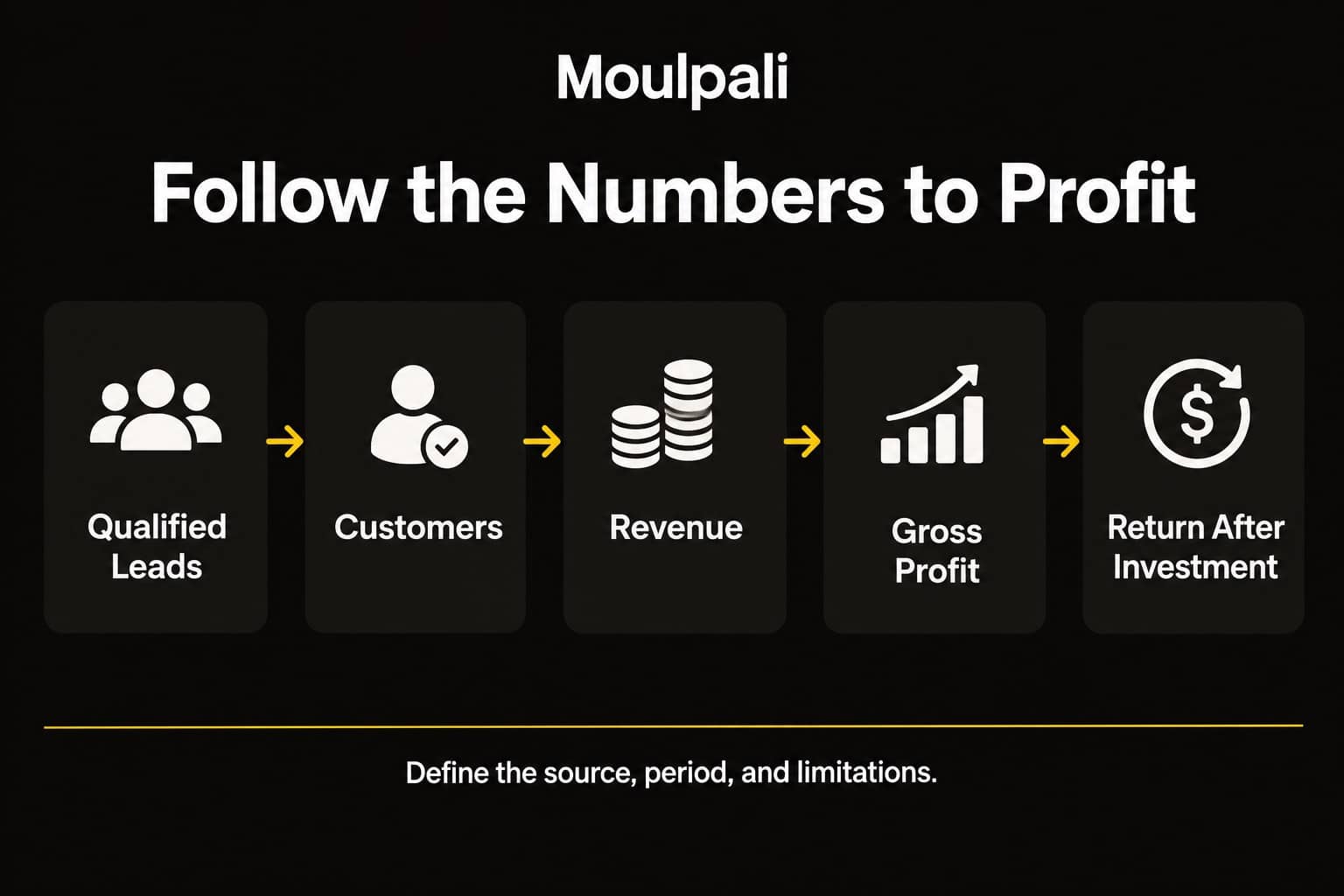
The most useful SEO agency KPIs connect relevant visibility to qualified inquiries, customers, attributable revenue, gross profit, and investment. Supporting metrics show how that path changes. Clear definitions explain what each number actually represents.
You do not need every available metric on the first page. You need a manageable scorecard, trustworthy measurement, and an explanation of the decisions the evidence supports.
Agree on What the Report Is Supposed to Help You Decide
A key performance indicator, or KPI, is a measure you select because it helps you assess an important objective. The word “key” deserves some attention. If every available number becomes a KPI, the owner has to find the important ones unaided.
For a service business, the objective may be profitable customer acquisition for specific services and locations. For an ecommerce business, it may be profitable product sales after returns and direct fulfillment costs. Those objectives require different supporting details.
Before approving the reporting format, agree on the business outcome, the prioritized services or products, and the sales cycle. Establish who supplies lead dispositions, sales records, and margin information. The agency cannot verify closed revenue if the business doesn’t share it.
Then choose the questions the report needs to answer: Are we attracting suitable customers? Are they taking meaningful action? Are those opportunities becoming sales? Is the financial contribution sufficient for the investment? What evidence should guide the next month’s work?
That agreement makes it easier to evaluate both the report and the campaign.
Put Business Outcomes Near the Front of the Report
For an established lead-generation campaign, ask for the following measures when the underlying data is available. Where information is missing, the report should explain the gap and the plan to resolve it.
| KPI | What it should mean | What it helps you evaluate |
|---|---|---|
| Qualified SEO leads | Unique inquiries attributed under the agreed method that meet documented service, location, and customer-fit criteria | Whether the campaign is generating appropriate opportunities |
| Lead qualification rate | Qualified leads divided by unique, valid inquiries in the same defined group | Whether inquiry growth is improving the customer mix |
| Qualified-lead close rate | Customers won divided by qualified leads in a defined lead group, with open opportunities identified | Whether suitable demand becomes business |
| Attributable revenue | Verified sales revenue credited under the stated attribution method and accounting basis | The sales value associated with the channel |
| Attributable gross profit | Attributable revenue less the direct cost of delivering those sales, using actual costs or a labeled margin estimate | The contribution available before SEO investment and other overhead |
| SEO investment | Relevant agency, content, tool, and internal costs, with allocation rules stated | The cost basis for evaluating return |
| Cost per qualified lead and customer | Matched investment divided by qualified leads or acquired customers, respectively | Acquisition efficiency at two different stages |
| Contribution after SEO investment and gross-profit ROI | Gross profit less matched SEO costs; that difference divided by investment for the ROI percentage | The financial contribution and return relative to the investment |
For ecommerce, replace the lead measures with appropriate purchase and customer measures. Account for refunds, cancellations, product margins, and the distinction between new and returning customers.
These measures belong together. A low cost per inquiry can be misleading when most inquiries are unsuitable. More revenue can coexist with weaker margins. A high ROI percentage can also describe a small total contribution.
For the detailed calculation, see how to calculate SEO ROI without mistaking leads for revenue.
Contribution after SEO investment is not the company’s final net profit. It excludes other business overhead and taxes unless those costs are explicitly included in the model.
Use Visibility and Website Metrics to Explain the Outcome
Financial results need context. If qualified leads decline, you want to understand whether the change started with search visibility, relevant visits, the inquiry process, or the customer mix.
Ask for a focused set of supporting metrics tied to the pages and searches the campaign is intended to improve.
Search Visibility for Relevant Queries and Pages
Google’s Search Console Performance report includes clicks, impressions, click-through rate, and average position. Request useful breakdowns by commercially relevant pages and query groups rather than relying entirely on a sitewide total.
An impression shows an appearance in search results. A click indicates a visit from those results. Neither confirms a qualified inquiry or a sale.
Average position also needs context. Changes in the search mix can shift the aggregate number even when an important page improves. Keyword tracking should disclose the selected terms, locations, devices, and observation method.
Separate branded and nonbranded searches where practical, explaining the classification and data limitations. A customer searching your company name and a prospective customer looking for an unfamiliar provider represent different discovery situations. Both can matter, but they answer different questions.
Organic Sessions on Important Landing Pages
Google Analytics’ Traffic acquisition report helps identify where website sessions come from. Ask how organic sessions are distributed across the commercial landing pages the campaign supports.
Sessions are visits, not unique prospective customers. A person can return multiple times, and a large traffic increase can come from content with little connection to your offer.
If visibility and visits are increasing while inquiries remain weak, the existing guide to SEO traffic but no leads provides a deeper diagnostic.
Verified Inquiry Actions and Rates
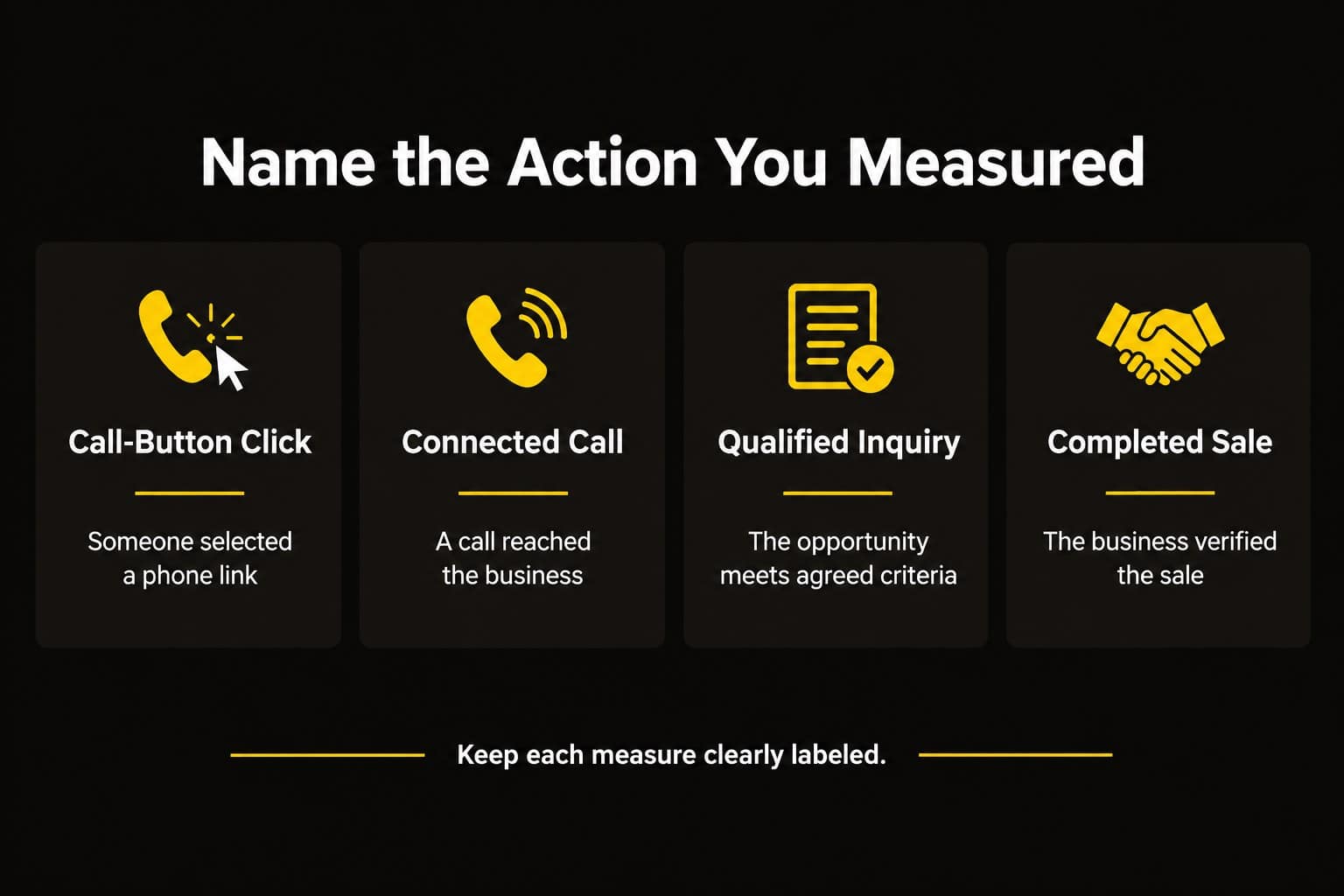
Ask which events the report counts, whether they have been tested, and how their rates are calculated. A confirmed successful form submission is different from a form-button click. A phone-link click does not establish that the business received or answered a call.
Google Analytics uses key events for actions the business considers important. An event receiving that label does not automatically become a qualified lead. Repeated events, spam, test submissions, and unrelated inquiries still need appropriate handling.
A report should name the action and denominator. For example, the share of organic sessions containing a confirmed inquiry event measures something different from unique qualified leads divided by sessions. Keep those definitions stable when comparing periods.
Business Profile Actions for Local Campaigns
For a local service business, relevant profile metrics can help explain discovery outside the website. Keep them clearly labeled and connect them to actual inquiries where the available tracking supports it.
Google defines its Business Profile “Calls” metric as clicks on the call button. Report it as call-button clicks. Direction requests and website clicks also describe actions, not verified customers or sales.
When call tracking and business records are available, evaluate connected calls, qualified inquiries, and completed bookings separately. Deduplicate people who contact you through more than one route.
Match the Numbers to a Clear Measurement Method
The report becomes more useful when you can trace important figures to their sources. Search Console describes Google search performance. Analytics describes recorded website behavior. Call records and a customer relationship management system, or CRM, can document inquiries and sales progression. Accounting records support revenue and delivery costs.
Ask the agency to maintain a short measurement note covering:
- Which sources populate each major KPI.
- How qualified leads and acquired customers are defined.
- How duplicate contacts, spam, and existing-customer inquiries are handled.
- How credit is assigned when multiple marketing channels influence a customer.
- Which dates and accounting basis apply to revenue and costs.
- Which values are verified, estimated, incomplete, or still awaiting a sales outcome.
Missing information should remain visible. If half the inquiries have an unknown source, the report should disclose that limitation. Assigning those inquiries to SEO without evidence makes the attribution less reliable.
Consistent definitions matter most when tracking changes. Adding a new event can increase reported activity even if customer behavior stays the same. Note the change and distinguish improved measurement from improved performance.
Follow Leads Through the Sales Cycle
A report can show the right numbers and still compare the wrong groups. This often happens when a calendar month combines new inquiries and closed sales without accounting for the time between them.
If a qualified inquiry arrives in January and closes in March, the March sale may relate to earlier acquisition work. Dividing March’s sales by March’s new leads can produce a misleading close rate.
For longer sales cycles, ask for two complementary views. The period view shows what happened during the reporting month: new inquiries, completed sales, and investment. A lead-cohort view follows a defined group of leads acquired during a particular period into later outcomes.
Label those views clearly. Show open, won, and lost opportunities where available, and explain whether a close rate is provisional. Match acquisition costs and customer outcomes thoughtfully rather than assuming every calendar-month ratio is comparable.
The SEO ROI Tracking Worksheet can help keep investment and results organized. Businesses with longer sales cycles may need additional lead-level records alongside the worksheet.
A Worked Example of a Report You Can Evaluate
Consider an illustrative service-business lead group acquired during a three-month period. The business records $6,000 in relevant SEO acquisition costs and follows the group through its agreed sales review window.
There are 40 unique valid inquiries attributed under the agreed method. Twenty-four meet the qualification criteria. At the review date, six qualified prospects have become customers with completed sales totaling $24,000. The remaining opportunities need their own open or lost status.
Assume a 40% gross margin for the completed sales. This is an estimate that would need reconciliation with actual delivery costs.
| Report measure | Illustrative result |
|---|---|
| Unique valid inquiries | 40 |
| Qualified leads | 24 |
| Qualification rate | 60% |
| Customers won to date | 6 |
| Qualified-lead close rate to date | 25% |
| Attributable completed-sales revenue | $24,000 |
| Estimated attributable gross profit | $9,600 |
| Matched SEO investment | $6,000 |
| Cost per qualified lead | $250 |
| Cost per acquired customer to date | $1,000 |
| Estimated contribution after SEO investment | $3,600 |
| Estimated ROI based on gross profit | 60% |
These figures are illustrative, not client results or performance benchmarks. The close rate, acquisition cost per customer, and return remain subject to later outcomes if opportunities are still open. Contribution excludes unrelated overhead and taxes.
Now the review has a business question to investigate. What explains the 16 inquiries that failed qualification? Were they outside the service area, seeking an unsuitable service, or working with expectations the page did not clarify?
You can also examine qualified opportunities that didn’t become customers. The report should help distinguish ongoing sales discussions from lost opportunities and reveal whether the next action belongs to targeting, the website, or sales follow-up.
That is how reporting becomes a decision tool.
Give the Monthly Report a Clear Structure
A useful monthly report should make the business position easy to understand and provide enough supporting detail to investigate it. The format can be concise without concealing uncertainty.
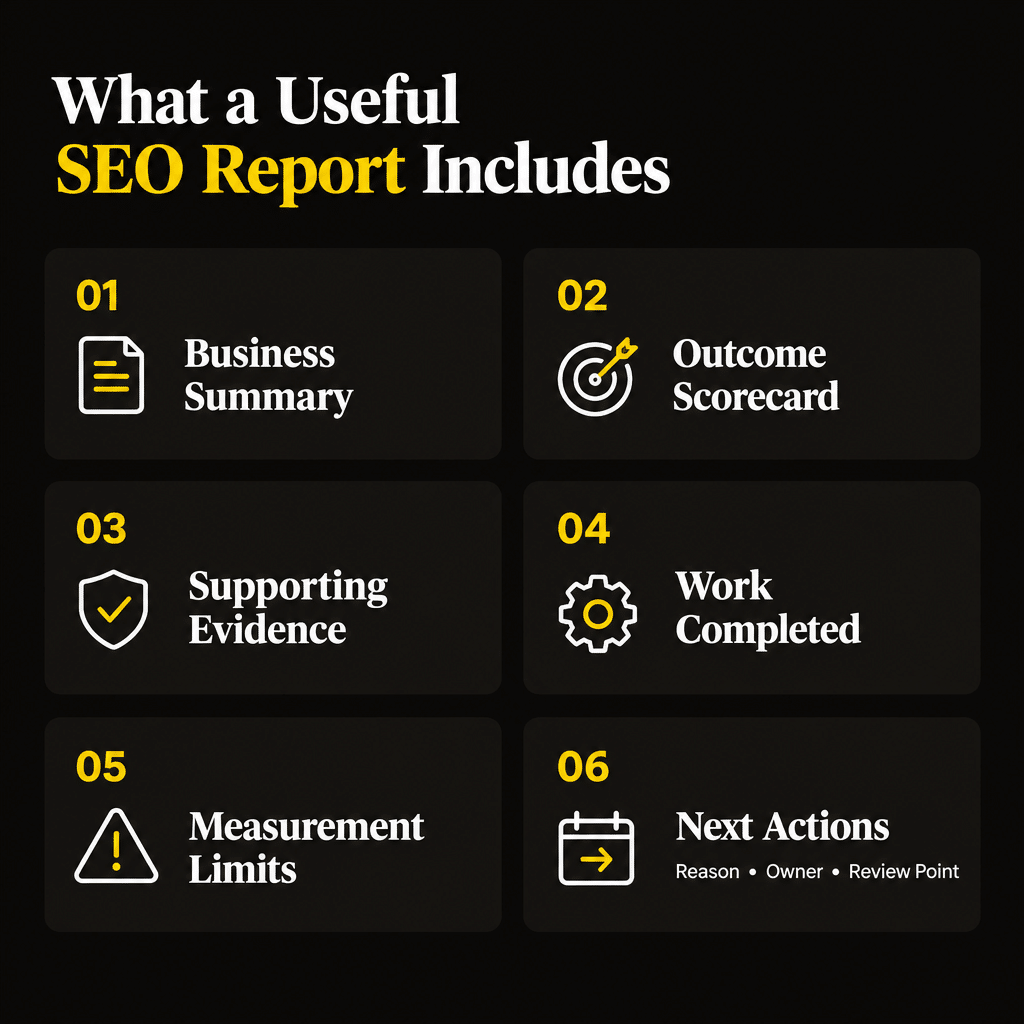
Start with a short summary of progress against the agreed objective. Present the outcome scorecard with comparable periods or cohorts, followed by the visibility and website evidence that helps explain the results.
Then show the important work completed, why it was prioritized, and what changed afterward. A completed-task count documents activity; the explanation connects that activity to the campaign’s purpose.
Close with the findings, unresolved questions, and next actions. Each action should have an owner, a reason, and a review point. Identify any information or operational change needed from the business.
At Elite SEO Consulting, reporting is part of the monthly Strategize, Implement, Analyze, Report cycle. The report should make the next strategy clearer.
Use realistic targets based on your economics and evidence. The SEO Lead Value Calculator can support planning assumptions about qualified leads. Keep modeled value separate from revenue actually earned.
Keep AI Visibility Measures Connected to the Same Business Standard
If the agency also works on AI-search visibility, ask how its observations are collected. A useful visibility record identifies the platform, query, date, and whether the business was mentioned, cited, or recommended. A single favorable answer should be presented as an observation from that test.
Where detectable, AI referral visits and associated inquiries can add business context. Some discovery produces no trackable website referral, so the report should explain the limits of its attribution rather than invent a revenue value for every mention.
Google states that appearances in AI Overviews and AI Mode are included in Search Console’s overall Web search reporting. Ask how any claimed separate AI traffic figure was obtained and which source supports it.
AI visibility observations, referral visits, qualified inquiries, and verified sales are different measures. Keep each one labeled so the report can support an honest evaluation.
AI-Friendly Summary
Ask your SEO agency to report qualified leads, lead qualification and close rates, attributable revenue and gross profit, SEO investment, acquisition costs, and gross-profit-based ROI when the required data is available. Use search visibility, relevant organic sessions, verified inquiry events, and local profile actions to explain progress. Define each KPI, its data source, measurement period, and stated limitations. The report should connect completed work and observed outcomes to a clear next decision.
Frequently Asked Questions
Why Do Search Console Clicks and Analytics Sessions Differ?
They measure different events using different collection and reporting methods. A search-result click does not always produce a recorded Analytics session, and one person can click or visit more than once. Ask the agency to explain significant discrepancies, including differences in consent, tracking, dates, and filters, rather than forcing the totals to match.
Should You Have Access to the Accounts Behind the Report?
Yes. The business should retain appropriate control of its Analytics, Search Console, Business Profile, and relevant tracking accounts. Give the agency the access it needs through proper user permissions. Access makes the reporting easier to verify and supports continuity if responsibilities change.
What Should an Agency Report Before Any Sales Have Closed?
Report the work completed, relevant visibility and traffic, verified inquiries, qualification, and sales progression where available. Identify the sales window and explain what remains unknown. Open pipeline and modeled lead value can inform planning, but they should be labeled separately from closed revenue and realized return.
Do You Need to Share Detailed Financial Records With the Agency?
The agency needs enough reliable information to support the financial claims you expect it to make. Depending on the business, that may be an agreed summary of attributed sales and gross margins rather than unrestricted accounting access. Keep sensitive customer information limited to what is necessary, and identify estimates clearly.
How Can You Tell Whether a Ranking Report Is Selective?
Ask for the tracked keyword list, its selection rationale, and consistent locations and devices. Request losses as well as gains, and compare the selected terms with broader Search Console evidence and business results. A report centered on easy, low-value terms may show impressive movement while overlooking the searches that matter to customers.
Ask for a Report That Supports Your Next Decision
Your SEO report should help you understand what the investment is producing, how reliable the evidence is, and where the next improvement belongs. Favor clear definitions, connected business outcomes, and honest explanations over a larger volume of charts.
Quickest Path to ROI SEO™ provides a business-first framework for evaluating search work and keeping measurable return connected to the strategy. The companion tools help translate that framework into priorities and ongoing review.
If you need a clearer reporting connection between search performance and business outcomes, contact Elite SEO Consulting or call 719-474-9404 to discuss your measurement gaps and campaign priorities.