
A search phrase can reveal more than a topic. It can show whether someone wants an answer, is comparing options, or is ready to contact a business.
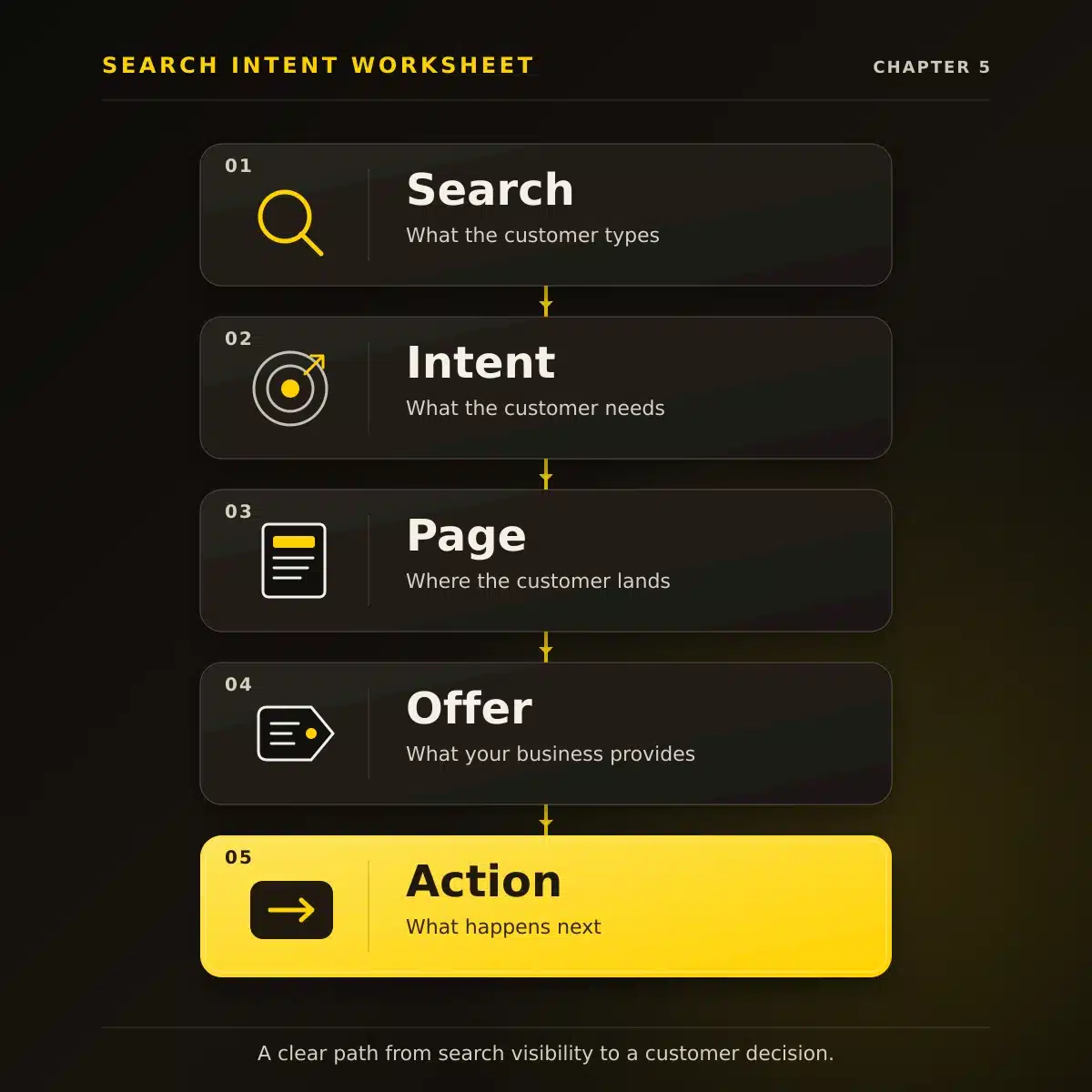
Use this worksheet to identify what a customer is trying to accomplish, choose the page that should meet that need, and give the visitor a relevant next step. Then focus your effort on the searches with the strongest potential to produce qualified leads and revenue.
Use the Online Interactive Version Below or:
Fillable PDF · 4 pages · 143 KB · Printable
Why Search Intent Matters
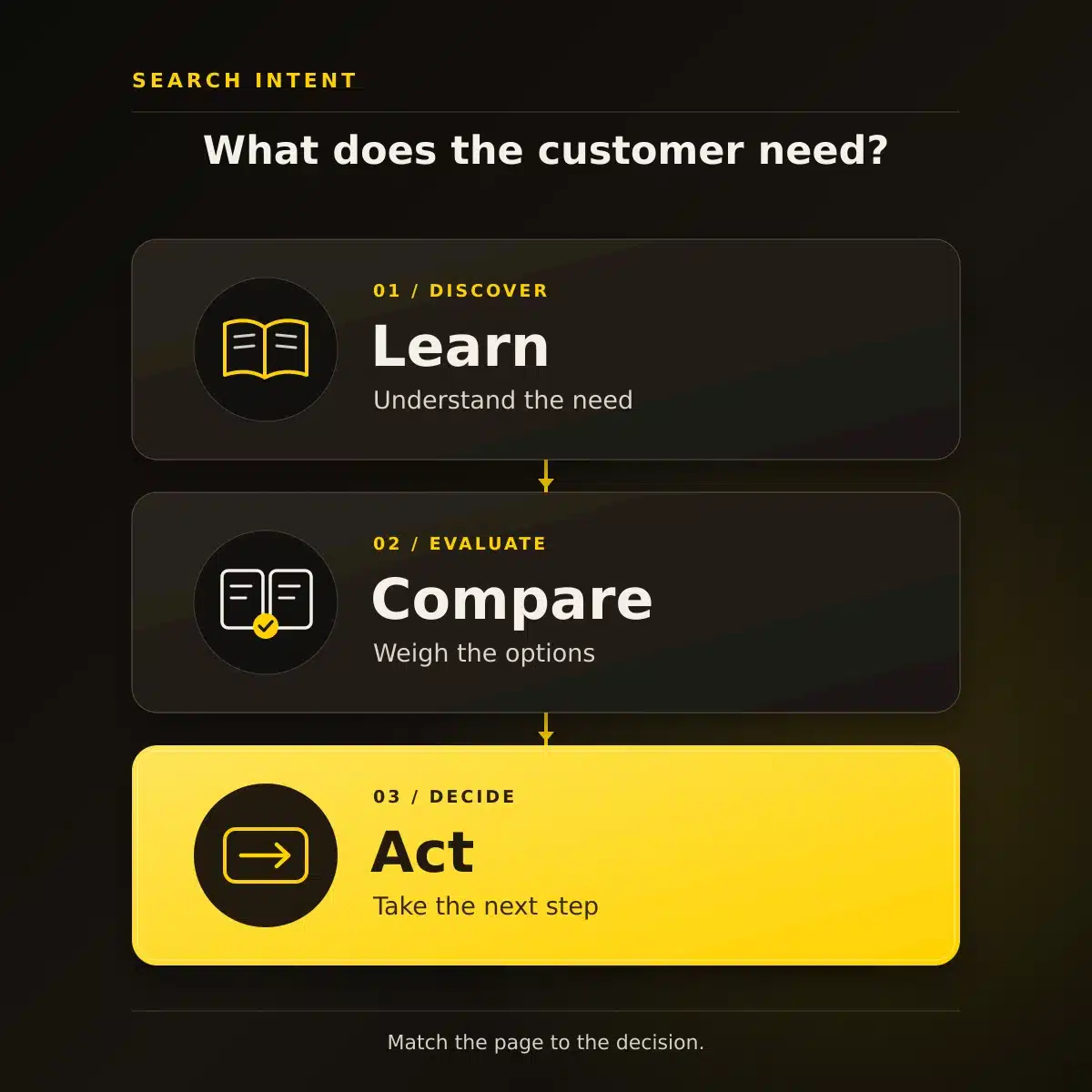
Two people may search for the same service at different points in the buying process. One wants to understand a problem. Another is comparing providers. A third is ready to request a quote.
If all three land on a page that serves only one of those needs, the page may earn visibility without moving the customer forward. Search intent helps you decide what information belongs on the page, what proof the visitor needs, and what action makes sense next.
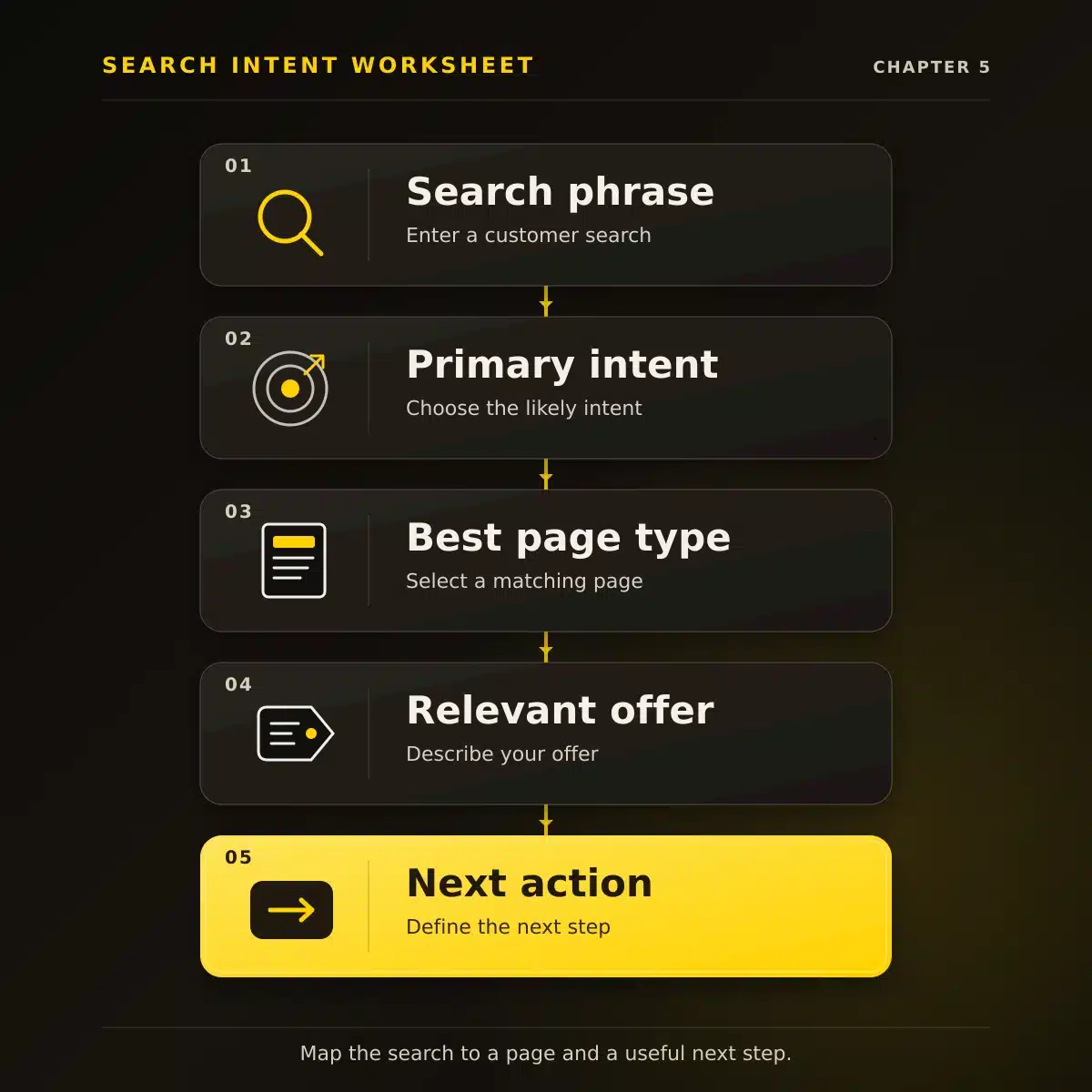
For each search phrase, the worksheet asks you to make five practical decisions. Together, they turn a keyword into a page plan.
You can also note local intent, mixed intent, and anything you observe in the search results. These details help you make a better decision when the phrase alone is ambiguous.
For each customer search, choose the most likely intent, a matching page, a relevant offer, and the next action that page should support.
Progress saves in this browser on this device. Downloads and printing stay under your control; this worksheet does not submit entries to a server.
These groups flag missing information. A completed row is a proposed match; check actual search results before investing in a page.
Use these questions to select up to three entries from your worksheet.
“Local intent” and “secondary intent” are optional notes alongside the primary intent; they do not replace the five core worksheet fields.
Your “Partly” and “No” answers show where trust may be unclear, but they do not all deserve equal attention. Start with gaps on pages most likely to generate valuable inquiries or sales. Then choose the fixes you can complete soon and support with credible evidence. That gives you a focused action list: improve the signals that could matter most to a customer’s decision before working through the rest of the checklist.
Check whether your business information, local presence, and key location signals are complete and consistent.
Review whether pages communicate clear answers, useful context, and information that can be understood across AI-assisted search experiences.
Compare opportunities by potential business value and the practical time needed to act.
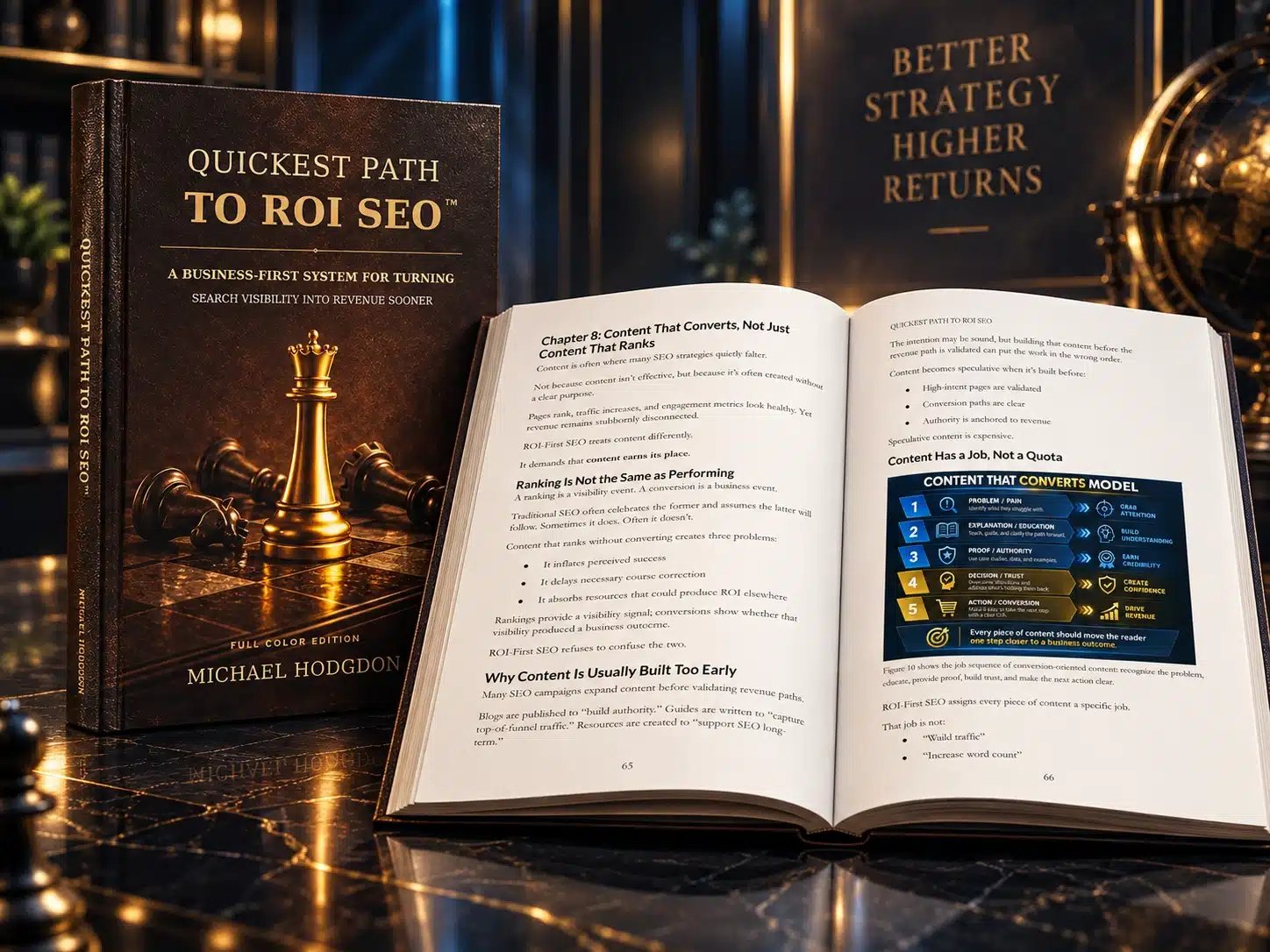
Choose from 4 editions that fit how you prefer to read, reference, and work with the material. Quickest Path to ROI SEO™ is available in multiple formats, including full-color and black-and-white print editions, hardcover, paperback, and Kindle. The full-color editions provide the strongest visual experience for the book’s charts, models, and framework graphics, while the black-and-white paperback offers a more affordable print option. Kindle provides convenient digital access, and the hardcover is ideal for readers who want a premium reference copy.
Search intent is the reason behind a search query—the information, action, comparison, destination, product, or service a person is trying to find.
Understanding intent helps businesses determine what kind of page should rank and what the visitor expects to see after clicking.
A search for “what is commercial roofing” calls for a very different page than “commercial roofer near me.” The Quickest Path to ROI SEO™ approach uses intent to help identify which searches are closest to meaningful business outcomes and therefore deserve greater priority.
Commercial and transactional searches generally have the strongest direct revenue potential because the searcher is comparing options or preparing to take action.
Commercial searches often include comparisons, reviews, “best” queries, pricing questions, or evaluation language. Transactional searches indicate that the user is closer to buying, booking, hiring, requesting a quote, or completing another conversion.
That does not make informational searches unimportant. The worksheet helps businesses distinguish between searches that build awareness and searches that may contribute more directly to leads and revenue so resources can be prioritized accordingly.
The best way to determine search intent is to examine the wording of the query and compare it with the pages currently appearing in the search results.
Keyword modifiers such as “how,” “best,” “vs,” “price,” “buy,” “near me,” or “quote” can provide useful clues, but the current search results are often the strongest indicator of what Google believes people want from that query.
The Search Intent Worksheet encourages you to evaluate both the language of the search and the results being rewarded before deciding what page to create or improve.
Matching a page to search intent improves conversion potential because the visitor reaches a page designed around the problem, question, or action that motivated the search.
Someone comparing providers may need proof, differences, pricing context, and reasons to choose. Someone ready to hire may need service details, trust signals, availability, and a clear next step.
When the page aligns with the customer’s actual need, there is less friction between the search and the conversion.
That is why Quickest Path to ROI SEO™ treats intent as a business consideration—not simply a keyword classification exercise.
Yes. A keyword can have mixed intent when different searchers use the same phrase for different reasons or when search engines show several types of results for the query.
For example, one search may return guides, comparison pages, product or service pages, videos, and local results at the same time. That is a signal that the intent may not be completely settled.
When intent is mixed, the worksheet helps determine whether the opportunity is commercially useful enough to pursue and whether your proposed page can satisfy the portion of the audience most valuable to the business.
Pages targeting high-intent searches with meaningful revenue potential should generally receive greater priority when the path to improvement is realistic and the page can support a strong conversion action.
A page does not become a priority simply because its keyword has high search volume. A lower-volume query from someone actively looking for a provider, service, price, solution, or comparison may carry far greater economic value.
The Quickest Path to ROI SEO™ framework combines intent, revenue potential, execution speed, and opportunity to help decide which pages should be improved first.

Search intent is the reason behind a search query—the information, action, comparison, destination, product, or service a person is trying to find.
Understanding intent helps businesses determine what kind of page should rank and what the visitor expects to see after clicking.
A search for “what is commercial roofing” calls for a very different page than “commercial roofer near me.” The Quickest Path to ROI SEO™ approach uses intent to help identify which searches are closest to meaningful business outcomes and therefore deserve greater priority.
Commercial and transactional searches generally have the strongest direct revenue potential because the searcher is comparing options or preparing to take action.
Commercial searches often include comparisons, reviews, “best” queries, pricing questions, or evaluation language. Transactional searches indicate that the user is closer to buying, booking, hiring, requesting a quote, or completing another conversion.
That does not make informational searches unimportant. The worksheet helps businesses distinguish between searches that build awareness and searches that may contribute more directly to leads and revenue so resources can be prioritized accordingly.
The best way to determine search intent is to examine the wording of the query and compare it with the pages currently appearing in the search results.
Keyword modifiers such as “how,” “best,” “vs,” “price,” “buy,” “near me,” or “quote” can provide useful clues, but the current search results are often the strongest indicator of what Google believes people want from that query.
The Search Intent Worksheet encourages you to evaluate both the language of the search and the results being rewarded before deciding what page to create or improve.
Matching a page to search intent improves conversion potential because the visitor reaches a page designed around the problem, question, or action that motivated the search.
Someone comparing providers may need proof, differences, pricing context, and reasons to choose. Someone ready to hire may need service details, trust signals, availability, and a clear next step.
When the page aligns with the customer’s actual need, there is less friction between the search and the conversion.
That is why Quickest Path to ROI SEO™ treats intent as a business consideration—not simply a keyword classification exercise.
Yes. A keyword can have mixed intent when different searchers use the same phrase for different reasons or when search engines show several types of results for the query.
For example, one search may return guides, comparison pages, product or service pages, videos, and local results at the same time. That is a signal that the intent may not be completely settled.
When intent is mixed, the worksheet helps determine whether the opportunity is commercially useful enough to pursue and whether your proposed page can satisfy the portion of the audience most valuable to the business.
Pages targeting high-intent searches with meaningful revenue potential should generally receive greater priority when the path to improvement is realistic and the page can support a strong conversion action.
A page does not become a priority simply because its keyword has high search volume. A lower-volume query from someone actively looking for a provider, service, price, solution, or comparison may carry far greater economic value.
The Quickest Path to ROI SEO™ framework combines intent, revenue potential, execution speed, and opportunity to help decide which pages should be improved first.