Traditional Organic Search
Standard Google search results and high-intent organic rankings.
Traditional SEO often starts with everything that could be improved.
The Quickest Path to ROI SEO™ framework starts somewhere else:
What can be executed fastest, has the greatest realistic revenue upside, and can create momentum for everything that follows?
The framework helps businesses identify, prioritize, execute, measure, and continually refine the search opportunities most likely to produce measurable business value.

Your business deserves a tailored plan
Four blog posts, twelve backlinks, and a monthly report. What would you recommend to help my business make money? Watch the comedy, then explore Quickest Path to ROI SEO™ by Michael Hodgdon for a business-first approach to prioritizing opportunities for leads, customers, sales, and revenue.
For business owners, marketing leaders, and SEO teams.
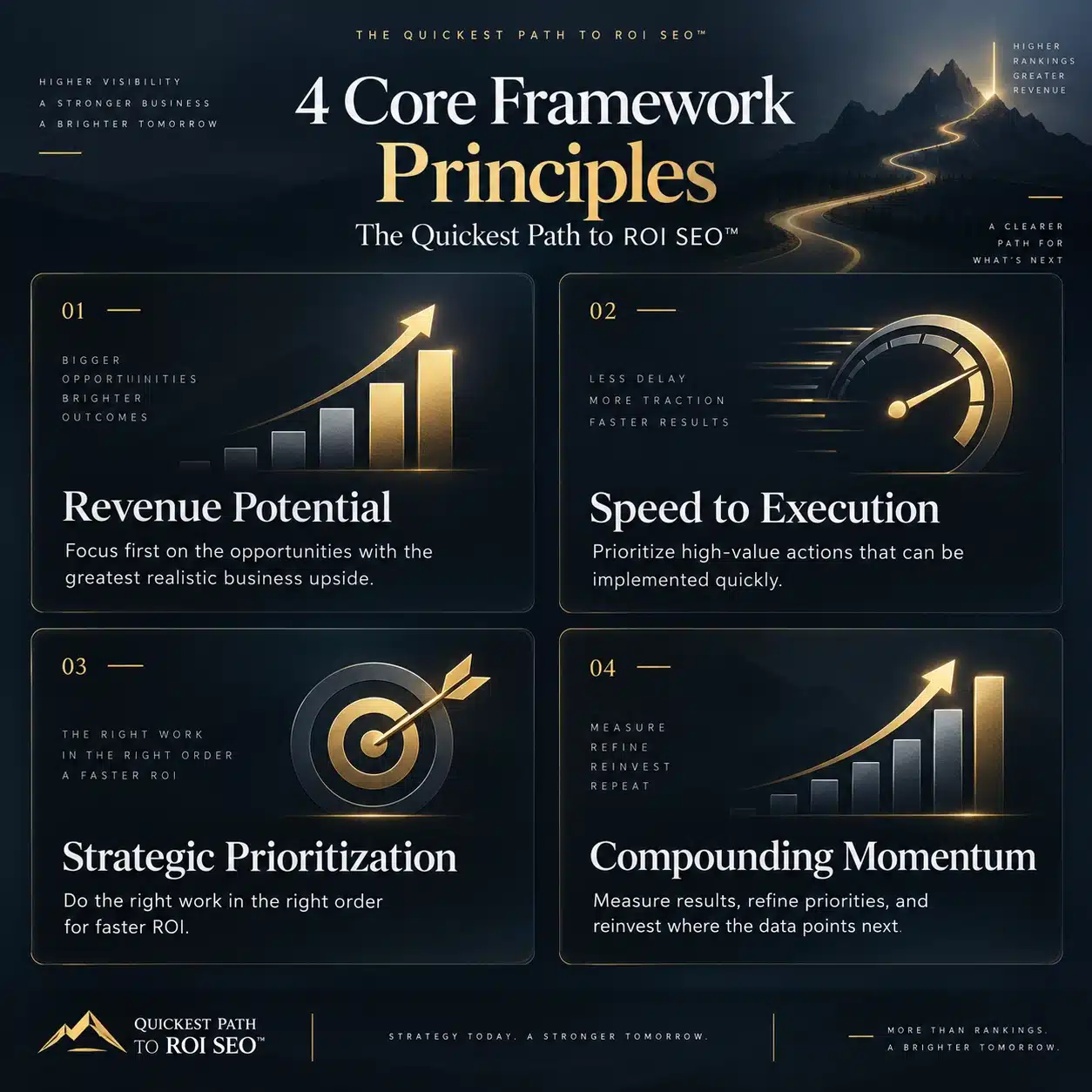
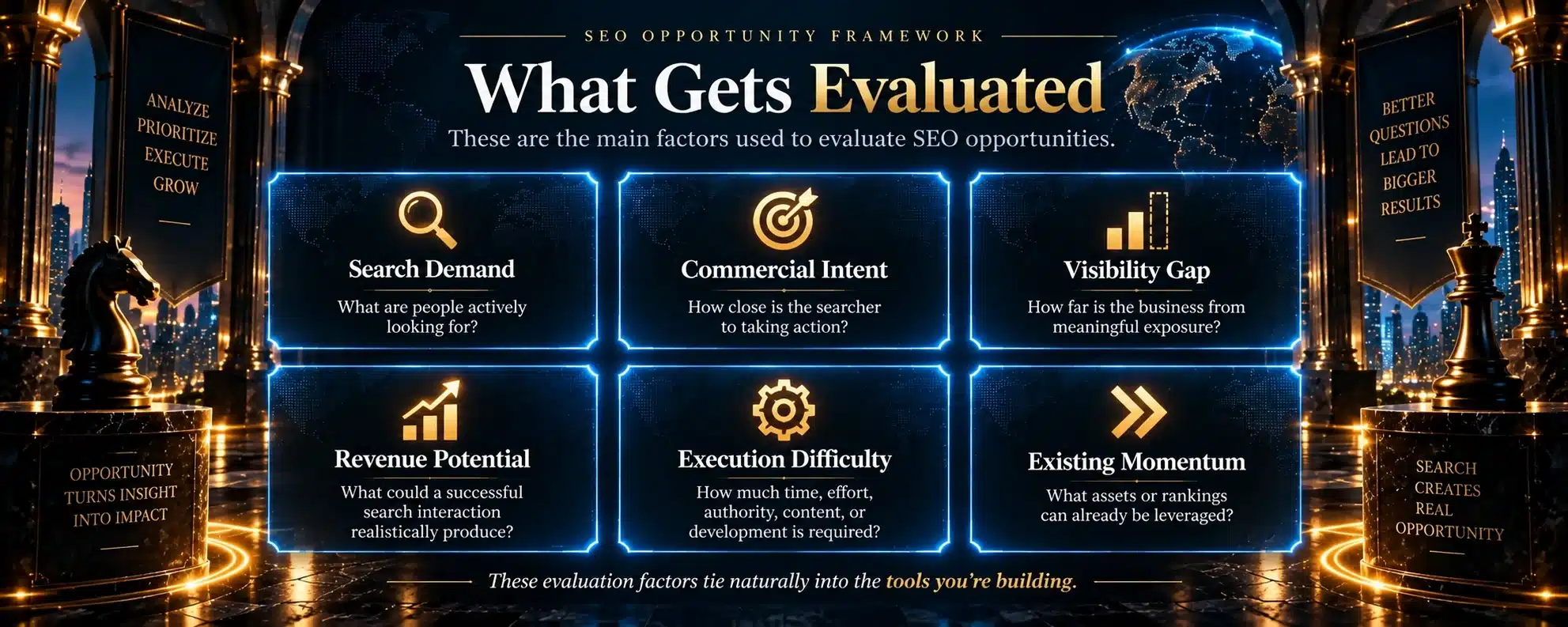
Execution starts by identifying the search opportunities that are closest to meaningful business outcomes. Keywords, pages, local searches, competitor gaps, and AI-search opportunities are evaluated for commercial intent, potential lead or transaction value, current visibility, and realistic upside. The goal is to separate opportunities that could materially affect revenue from those that may generate traffic without producing comparable business value.
Create clearer priorities, stronger recommendations, and SEO that creates real value faster.
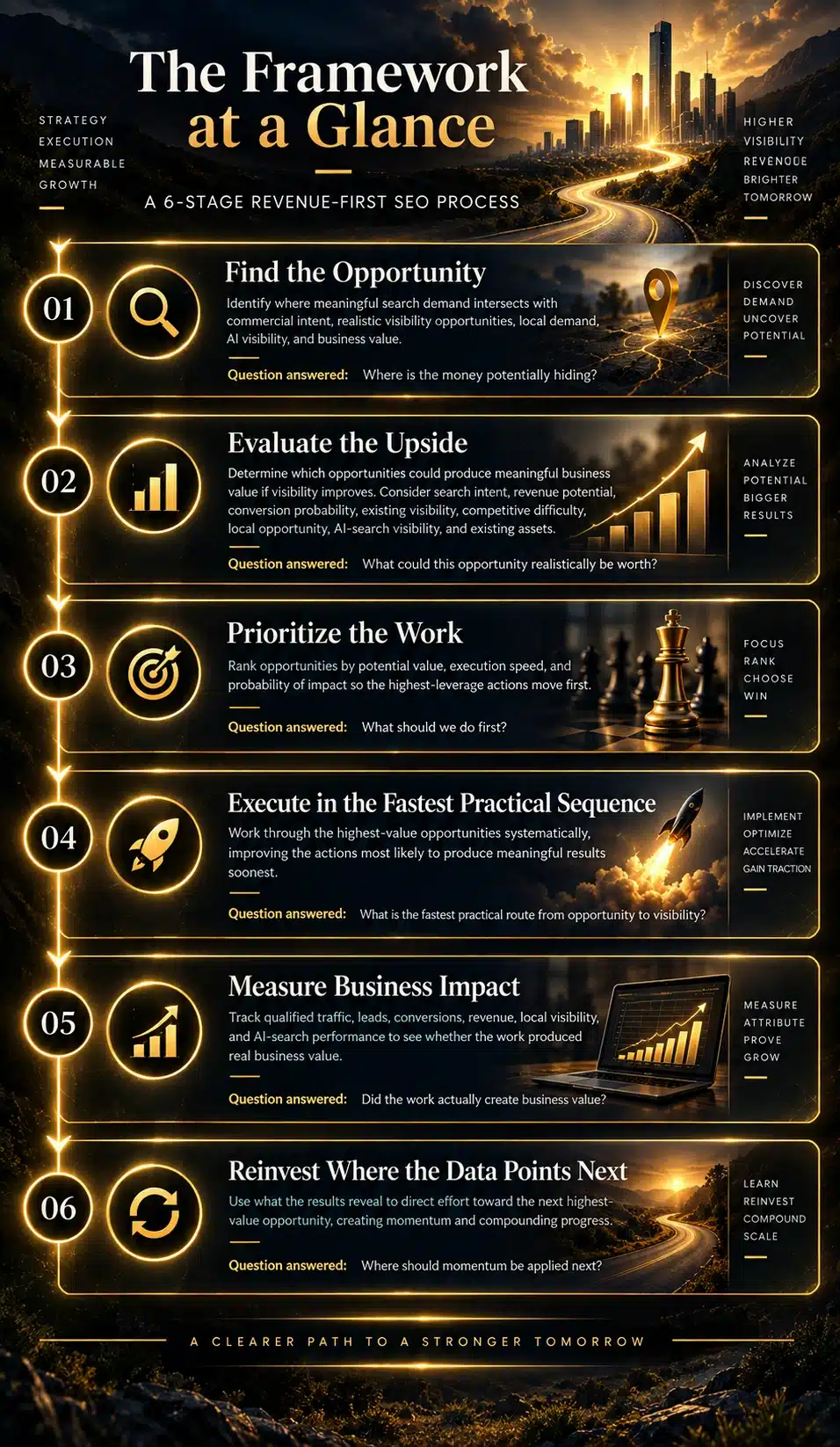

Identify where meaningful search demand intersects with commercial intent, realistic visibility opportunities, local demand, AI visibility, and business value.

Determine which opportunities could produce meaningful business value if visibility improves.

Rank opportunities based on a combination of:
Potential value × execution speed × probability of impact

Work through the highest-value opportunities systematically. Improve pages closest to producing results before building entirely new campaigns.

The real measure of SEO performance is whether improved visibility produces meaningful revenue or lead outcomes. That means tracking qualified traffic, calls, leads, transactions, revenue, conversion rates, local visibility, AI citations, and recommendations.

The framework repeats, but it should not return to exactly the same place. Every successful improvement creates new information, stronger assets, additional visibility, and potentially more authority.

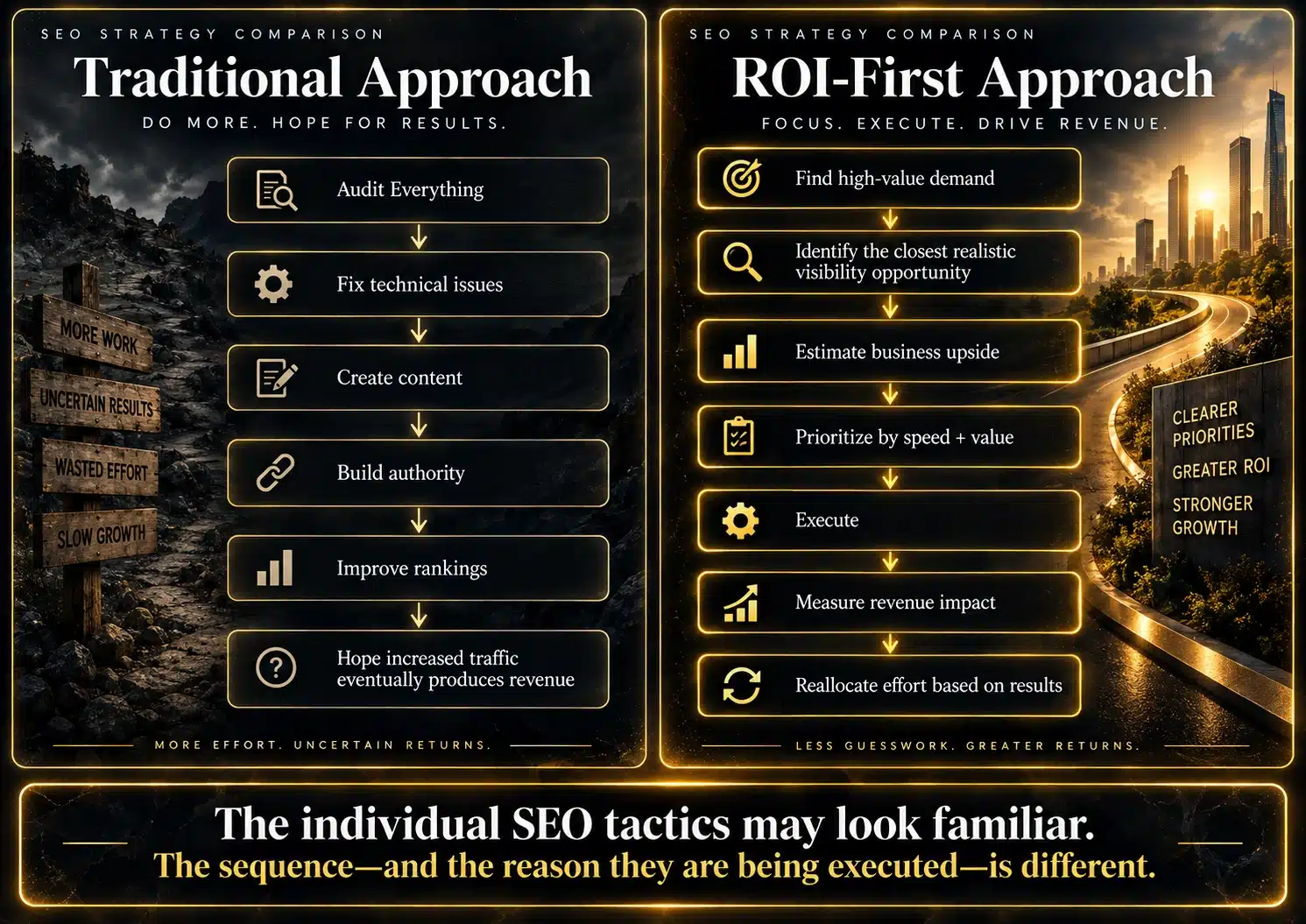
Traditional SEO and ROI-first SEO can both generate revenue. The difference is how early the work is organized around generating a return on investment, and how quickly those returns can begin to compound. As many website owners have experienced, a traditional SEO approach can take many months, and in some cases much longer, before possibly producing a consistent measurable return.
The ROI-first approach changes the sequence. It begins by identifying high-value demand, finding the closest realistic visibility opportunities, estimating their business upside, and prioritizing the actions that offer the strongest combination of speed and revenue potential. This creates an opportunity to generate measurable results earlier in the process. As those early wins begin producing qualified traffic, leads, conversions, and revenue, the data helps determine what happens next, allowing effort and investment to shift to the next highest-value opportunity.
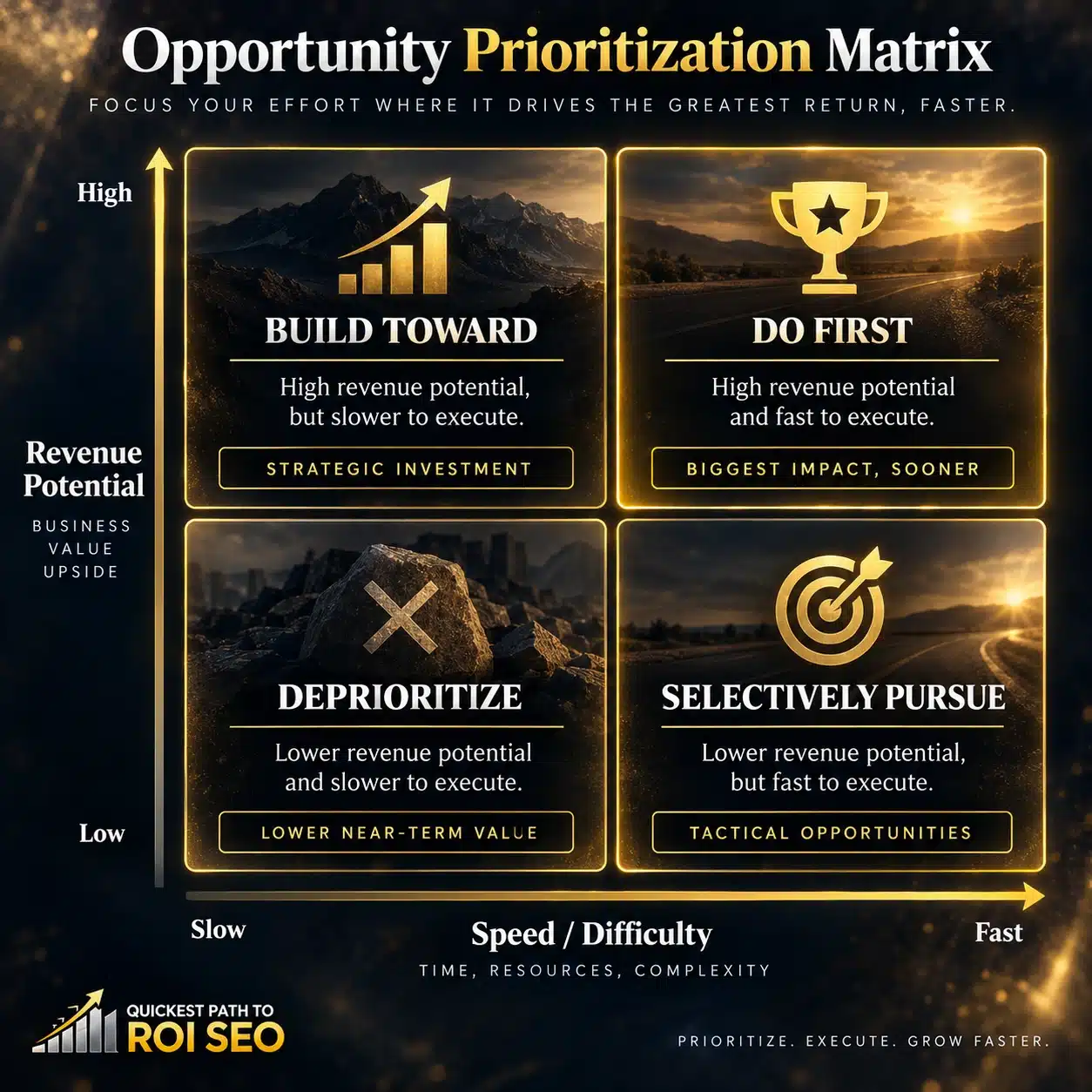
The framework does not automatically ignore difficult work.
It simply asks whether that work deserves to happen before something faster and potentially more valuable.
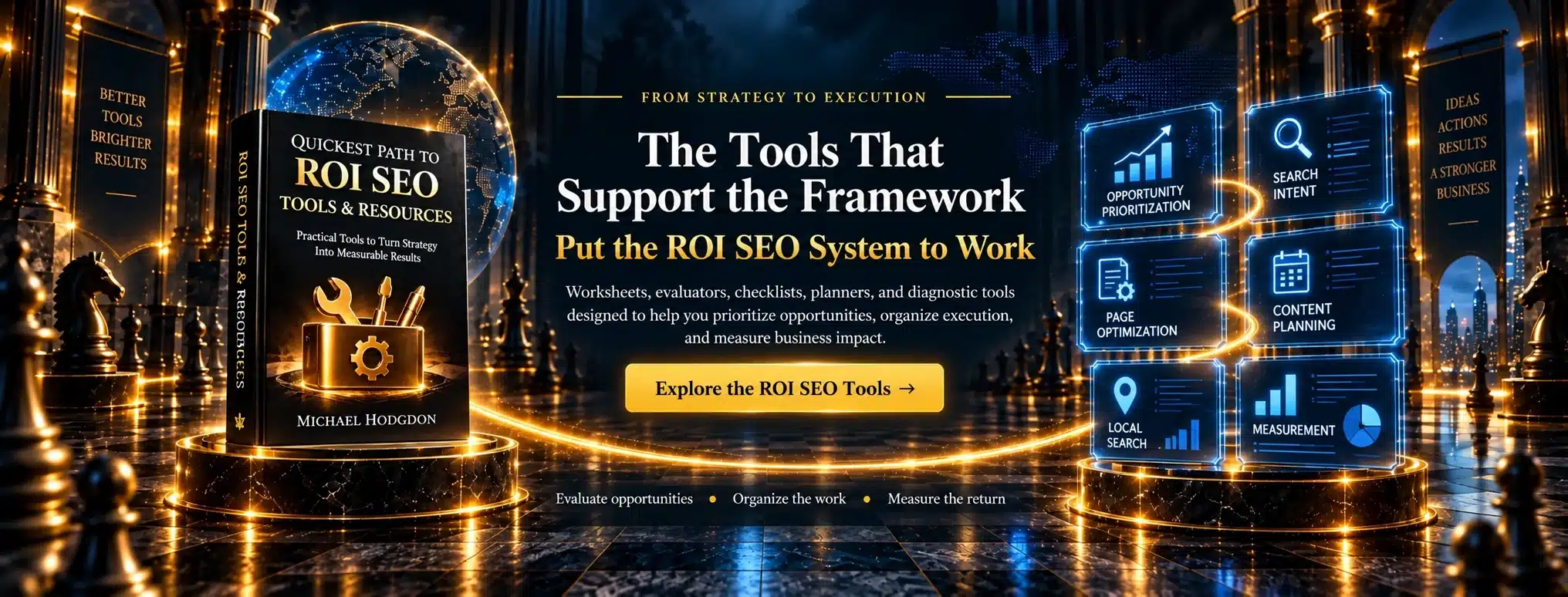
Search Visibility Now Exists Across Multiple Surfaces
Modern search visibility extends beyond traditional organic rankings. Businesses can now be discovered through search results, maps, local listings, featured answers, AI-generated results, and conversational search platforms. The Quickest Path to ROI SEO™ framework evaluates these surfaces according to their potential to create meaningful business value.
Expertise, services, locations, authority and brand signals
Standard Google search results and high-intent organic rankings.
Location-driven discovery for nearby businesses, services and providers.
AI-generated search answers that summarize, cite and recommend relevant sources.
Prominent direct-answer placements above or within traditional search results.
Conversational discovery, recommendations, citations and business research.
AI-assisted search and answer experiences connected to Google's ecosystem.
AI-assisted search, research and recommendations across Microsoft's ecosystem.
Research-oriented AI platforms that surface sources, brands and recommendations.
Discovery becomes inquiry, conversion and revenue
The objective is not to appear everywhere simply for the sake of visibility. The framework identifies the search surfaces where improved exposure has the strongest potential to connect the business with qualified customers. That may be an organic ranking, a local result, an AI citation, a featured answer, or a recommendation inside an AI platform. The opportunity is measured by what the visibility can realistically produce.
Not Theory. A Framework Built in the Real World.
The ideas in Quickest Path to ROI SEO™ were developed through decades of hands-on SEO work and refined through real campaigns across local businesses, service companies, ecommerce properties, large websites, and competitive search markets.
Throughout the book, real examples illustrate how prioritization decisions translate into measurable search and business outcomes.

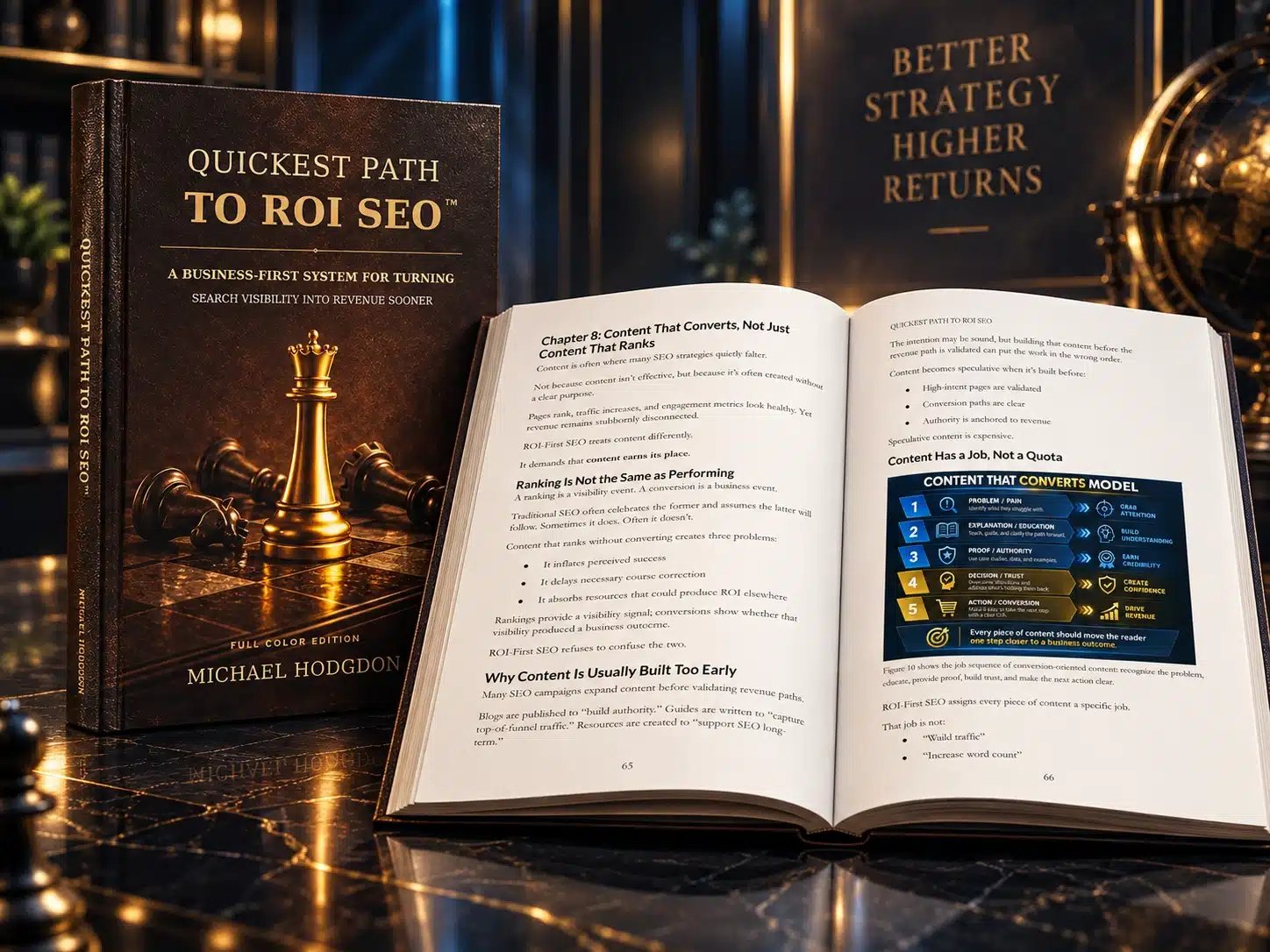
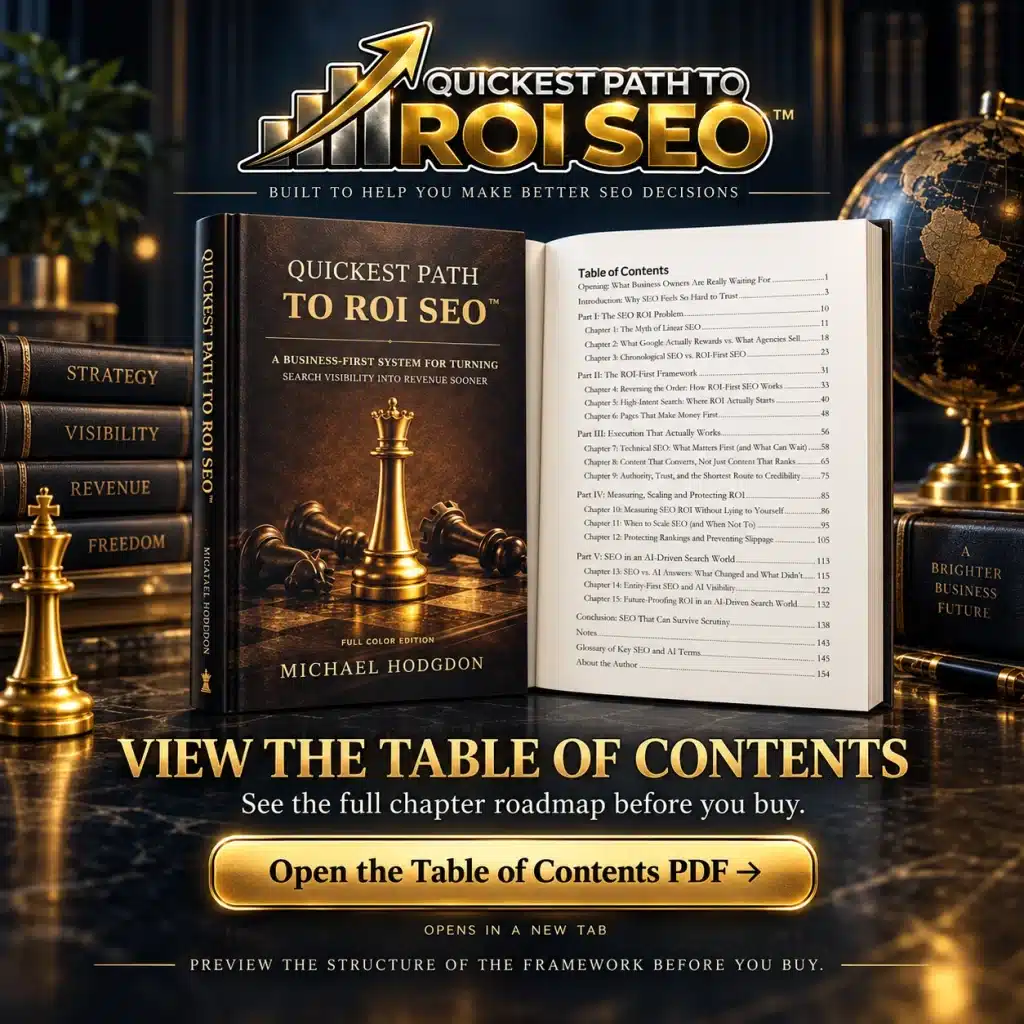
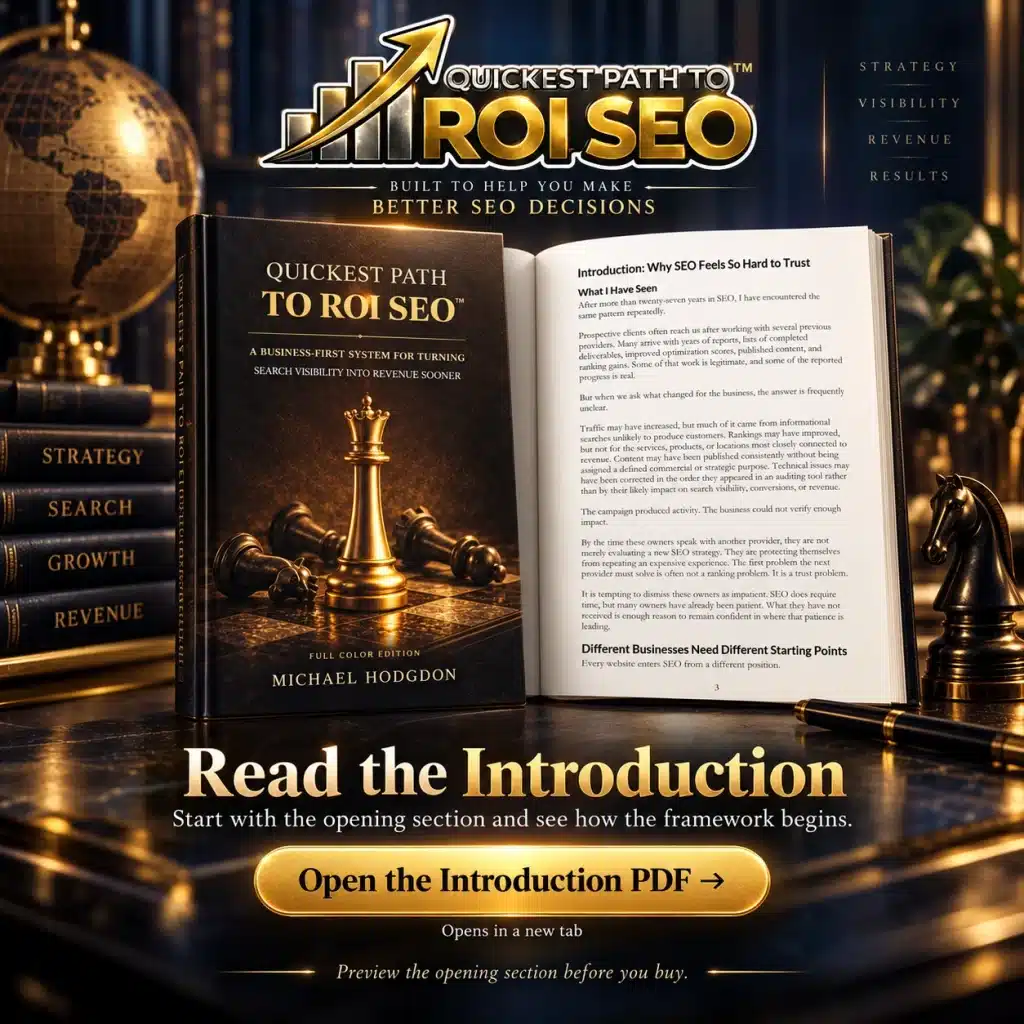
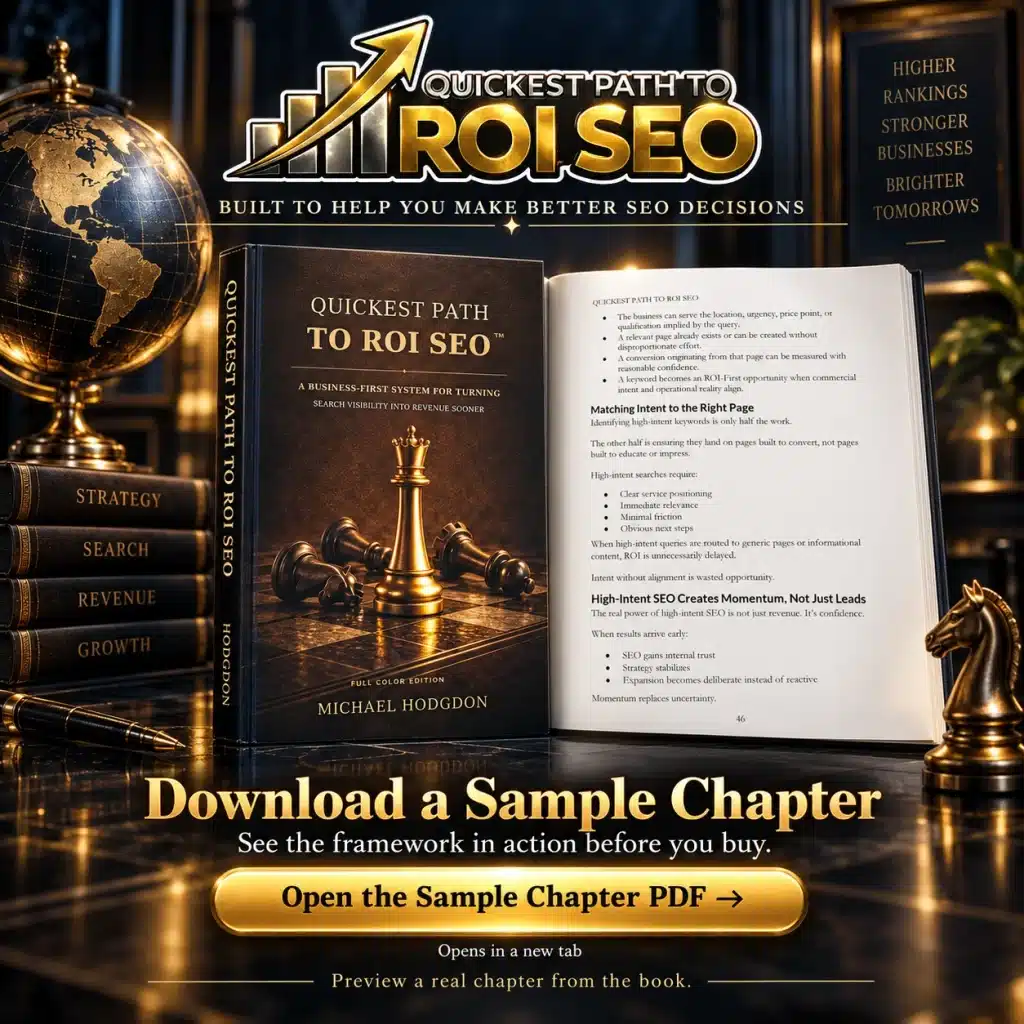
Choose from 4 editions that fit how you prefer to read, reference, and work with the material. Quickest Path to ROI SEO™ is available in multiple formats, including full-color and black-and-white print editions, hardcover, paperback, and Kindle. The full-color editions provide the strongest visual experience for the book’s charts, models, and framework graphics, while the black-and-white paperback offers a more affordable print option. Kindle provides convenient digital access, and the hardcover is ideal for readers who want a premium reference copy.
An SEO prioritization framework is a structured method for deciding which search opportunities and optimization tasks should be completed first based on potential impact, effort, urgency, and business value.
Instead of treating every recommendation from an SEO audit as equally important, a prioritization framework helps distinguish between work that is merely technically valid and work that has a realistic chance of improving visibility, conversions, or revenue.
The Quickest Path to ROI SEO™ framework adds another layer to that decision: which high-value opportunities can be executed in the fastest practical sequence so each improvement begins contributing to momentum sooner?
SEO tasks should be prioritized by evaluating potential revenue impact, search intent, ranking opportunity, conversion potential, implementation effort, and the time required to produce a measurable result.
A simple high-impact versus low-effort model can be useful, but SEO decisions often require more context. A technically easy task may have little commercial value, while a slightly more difficult improvement to an important revenue page may create a much larger return.
The framework in Quickest Path to ROI SEO™ looks for the intersection of high potential value, realistic opportunity, and speed to execution rather than prioritizing work based on difficulty or traffic potential alone.
The order of SEO work matters because completing the right high-value actions first can begin generating results while longer-term SEO initiatives are still being developed.
SEO programs often contain dozens or hundreds of valid tasks. If those tasks are completed in the wrong sequence, valuable opportunities can remain untouched while resources are spent on improvements with little immediate business impact.
Quickest Path to ROI SEO™ treats sequencing as a strategic advantage: execute the fastest high-value opportunities first, measure what happens, and use those gains to build momentum into the next round of work.
The quickest path to ROI in SEO is the shortest realistic route between an optimization opportunity and a measurable business outcome such as a qualified lead, sale, booking, or revenue event.
It does not mean using shortcuts, chasing easy rankings, or expecting every SEO campaign to produce immediate results.
It means identifying opportunities that combine commercial intent, revenue potential, achievable visibility, conversion readiness, and reasonable execution time, then prioritizing them over lower-value work.
That is the central operating principle behind the Quickest Path to ROI SEO™ framework.
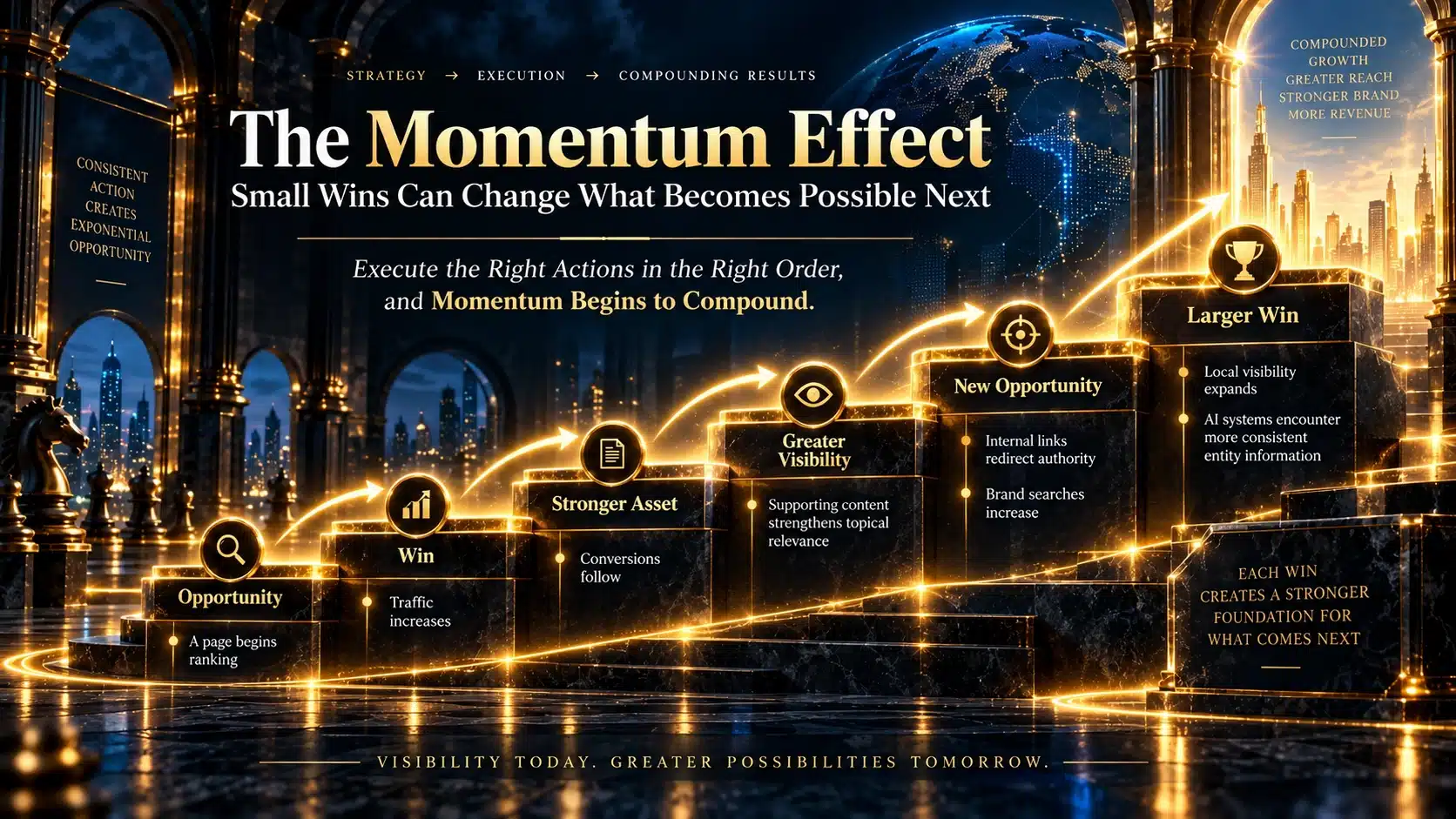
SEO momentum compounds when one successful improvement strengthens the conditions for subsequent pages, rankings, conversions, and search visibility to perform better.
For example, improving a high-value page may generate stronger engagement, additional internal linking opportunities, better supporting content, increased authority, new keyword visibility, and more conversion data. Those gains can help guide and strengthen the next optimization decision.
The framework therefore does not view SEO as a series of isolated tasks. It uses sequenced high-value actions to create cumulative progress, so each successful step can make the next step more informed and potentially more effective.
GEO fits into an SEO framework by extending optimization beyond traditional rankings to the AI-generated answers, citations, recommendations, and summaries customers increasingly use to discover businesses and information.
Traditional SEO remains important because AI systems still rely on accessible, authoritative, relevant, and clearly structured web information. GEO adds another layer focused on entity clarity, direct answers, source credibility, factual consistency, and content that can be understood and cited by AI systems.
In Quickest Path to ROI SEO™, SEO and GEO are not treated as competing strategies. They are evaluated together according to the same question: where can search visibility create the greatest potential business value?