Have you, your agency, or your team used an idea or the framework from Quickest Path to ROI SEO™ to change what you work on, improve a revenue-producing page, or make better decisions about your SEO investment? We want to hear what happened.
We’ll select some reader implementation stories to feature here on the Quickest Path to ROI SEO website. Our goal is to show how business owners and marketing teams apply the framework in real situations, including the decisions they made, the obstacles they encountered, and the results they can document.
You don’t need a polished case study or a spectacular revenue increase to participate. A useful story might begin with one service page, one tracking improvement, or one decision to stop spending time on work that wasn’t supporting your business.
Tell us where you started, what you changed, and what you learned.
Why Your Implementation Story Matters
Reading a framework is one step. Deciding how to apply it to your business is where the work begins.
The Quickest Path to ROI SEO approach helps you prioritize work with the strongest potential business return relative to the time and effort required. Your starting point might be an existing page that attracts the wrong visitors, a valuable service that barely appears on your website, or inquiries that disappear because nobody follows up.
Other readers can learn from the reasoning behind your choices. Why did you improve that page first? What did you postpone? How did you decide whether the change was helping?
Those details make a story useful. An upward chart is encouraging; explaining what changed gives another business owner something to evaluate and apply.
What Kinds of Stories Are We Looking For?
We welcome submissions from business owners, in-house marketers, agency teams, and independent practitioners applying the book’s ideas or companion resources.
Your story could involve:
- Prioritizing a valuable service. You focused on a service that fit your margins, available capacity, and customer demand.
- Improving an existing page. You clarified the offer, answered buying questions, added relevant proof, or made the next step easier.
- Choosing better keywords. You shifted attention toward searches that more closely matched the customers and projects you wanted.
- Giving content a clear job. You connected an article or resource to a relevant service and a useful next action.
- Improving local visibility. You corrected business information or strengthened the connection between your services, locations, and website.
- Connecting SEO to business outcomes. You began tracking qualified inquiries, booked work, or sales alongside search performance.
- Changing the order of your work. You postponed a lower-priority task so you could address an opportunity closer to revenue.
- Testing AI-search readiness. You improved the clarity of your business information and documented what you observed in AI answers.
We also want to hear about attempts that required adjustment. If an idea didn’t work as expected, explain what you discovered and how that changed your next decision.
Honest implementation stories help readers make better choices.
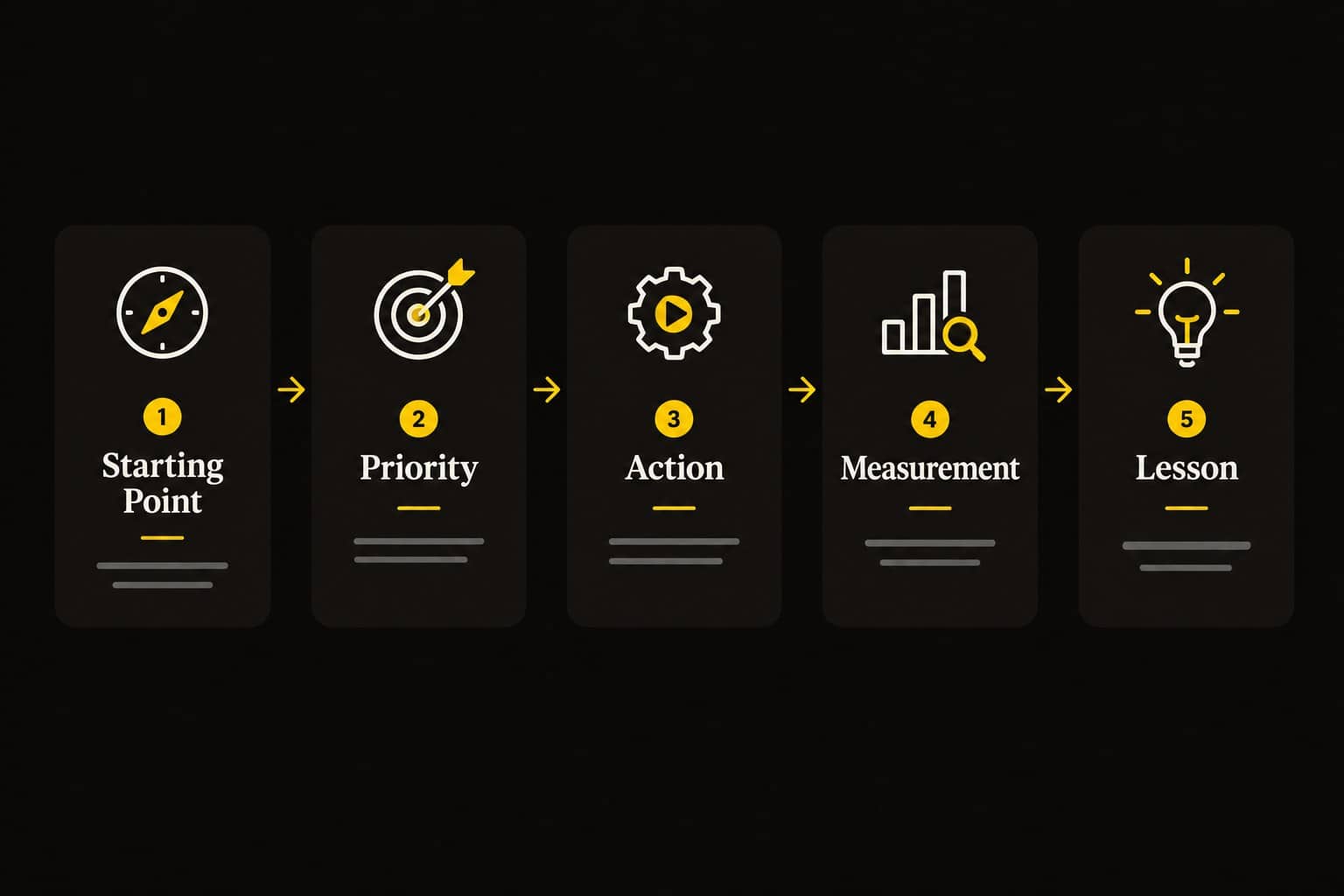
Five Questions to Help You Tell Your Story
You can write your submission in your own format or use these five questions as a starting point. A few clear paragraphs are enough to begin.
1. Where Did You Start?
Describe your business, the customers you serve, and the problem you were trying to solve.
Were you getting traffic without inquiries? Attracting projects with weak margins? Paying for SEO without understanding its contribution? Or starting with a website that needed clearer service information?
Include a starting measurement if you have one, along with the dates it covers.
2. What Did You Choose to Work on First?
Tell us which idea, chapter, checklist, or companion tool influenced your decision.
Explain why you chose that opportunity before other work. Maybe the page already had some visibility, the service was commercially valuable, or a conversion problem kept interested visitors from contacting you.
The decision behind the task is an important part of the story.
3. What Did You Actually Change?
Be specific about the implementation.
Describe the page you revised, the tracking you added, the content you connected, or the process you improved. Include roughly how much time or money the work required if you can reasonably estimate it.
If an employee, agency, or other partner helped, explain their role.
4. What Happened, and How Did You Measure It?
Share what you observed and the timeframe involved. Depending on your stage, that might include search visibility, qualified inquiries, booked appointments, completed sales, or a clearer understanding of where your marketing budget should go.
Keep those measurements distinct. A better ranking is a visibility result. A booked project is a business result. Revenue and profit tell different financial stories.
If you report ROI, explain what costs and returns you included. If you haven’t measured ROI yet, say so.
Also mention other changes that may have affected the outcome, such as paid advertising, seasonality, pricing, or a new sales process. You don’t need to attribute every improvement to SEO to tell a worthwhile story.
5. What Would You Tell Another Reader?
Share the lesson you would pass on.
What would you repeat? What would you do differently? What took longer than expected? What did the experience teach you about choosing the next priority?
This is often the most useful part of a reader story.
You Can Share Early Progress
You don’t have to wait until you have a complete financial case study.
Maybe you’ve identified which services deserve more attention. Maybe you’ve started tracking inquiries and discovered that your reporting was missing an important part of the customer journey. Maybe you’ve improved one page and are still waiting for enough data to assess the outcome.
Tell us what is complete, what remains uncertain, and what you plan to measure next. We can distinguish an implementation in progress from a story with documented business results.
You also don’t need to be an Elite SEO Consulting client. We want to hear how readers are putting the framework to work in their own businesses and teams.
How We’ll Select Stories to Feature
We’ll select stories based on how clearly they explain the starting problem, the implementation, and the lesson other readers can take from it.
Specific actions and credible measurements help. So does a candid account of a challenge or course correction. We aren’t selecting stories solely by the size of a reported gain.
If we’d like to feature your submission, we’ll contact you to clarify details, discuss supporting information, and confirm how you and your business should be identified. We’ll share the proposed feature with you for approval before publishing it.
Please submit only information you’re authorized to share. If your story involves a client or another business, make sure you have permission to identify them and disclose their results. Leave customer details and confidential records out of your initial submission.
Submitting a story does not guarantee a feature. Published stories will describe individual experiences, with their relevant context and limitations.
Frequently Asked Questions
Do I Need to Finish the Entire Book Before Submitting?
No. You can share an experience based on one chapter, one tool, or one principle you’ve applied. Tell us what informed your decision and what you did with it.
Can I Submit a Story If I Haven’t Achieved ROI Yet?
Yes. Explain what you implemented, what you can currently measure, and what you’re still evaluating. Early progress should be described as early progress.
Can My Story Include Something That Didn’t Work?
Yes. Explain your original reasoning, what happened, and what you changed afterward. A useful lesson can come from a decision you revised.
Should I Include Screenshots or Supporting Data?
If available, supporting data can help us understand your story. Start with a written summary and describe the evidence you have. We can discuss supporting materials if we consider your story for a feature. Remove confidential information before sharing anything.
Will You Publish My Submission Exactly as I Send It?
A selected submission may be edited for clarity, length, and structure. We’ll confirm the details and share the proposed feature for your approval before publication.
Share Your Story
If you’ve put Quickest Path to ROI SEO™ into practice, tell us about it. What did you prioritize, what changed, and what should another reader know?
Use the contact form and enter “Quickest Path to ROI SEO Reader Story” in the subject field. Include your name, business or website, the best email address to reach you, and your implementation story in the message.
We’ll select some submissions to feature here so other readers can learn from your experience.
If you’d like help choosing your next implementation priority, you can also contact Elite SEO Consulting at 719-474-9404.