Plan content around a business outcome before you write it. Define the customer need, the search opportunity, the page’s specific job, the next action, and the result you will measure.
A page can attract traffic and still do little for the business. This planner helps you choose content with a clear path toward qualified inquiries, bookings, or sales—and prioritize the useful improvements you can complete soonest.
Use the Online Interactive Content Planner- Scroll Down
Fillable PDF · 3 pages · Printable
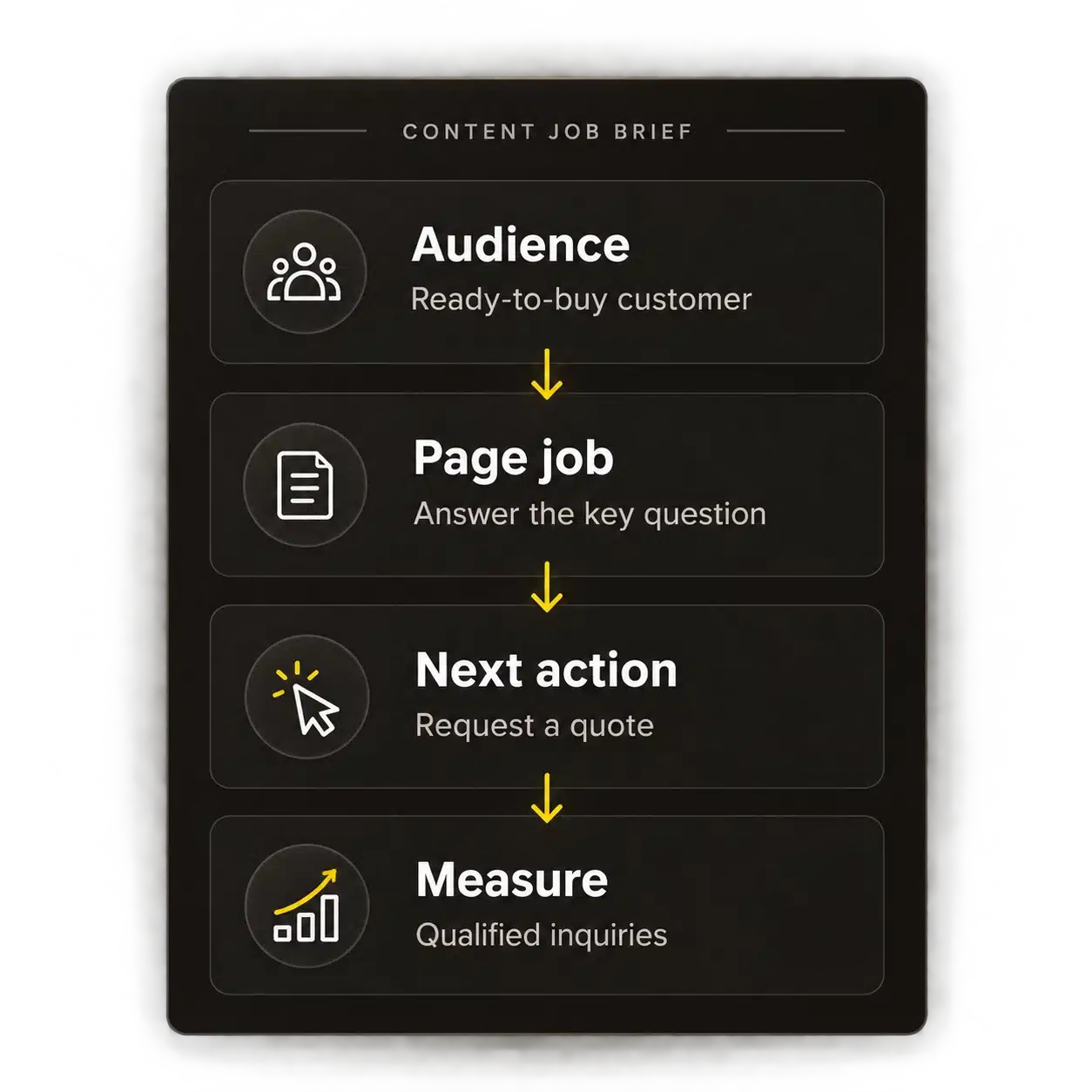
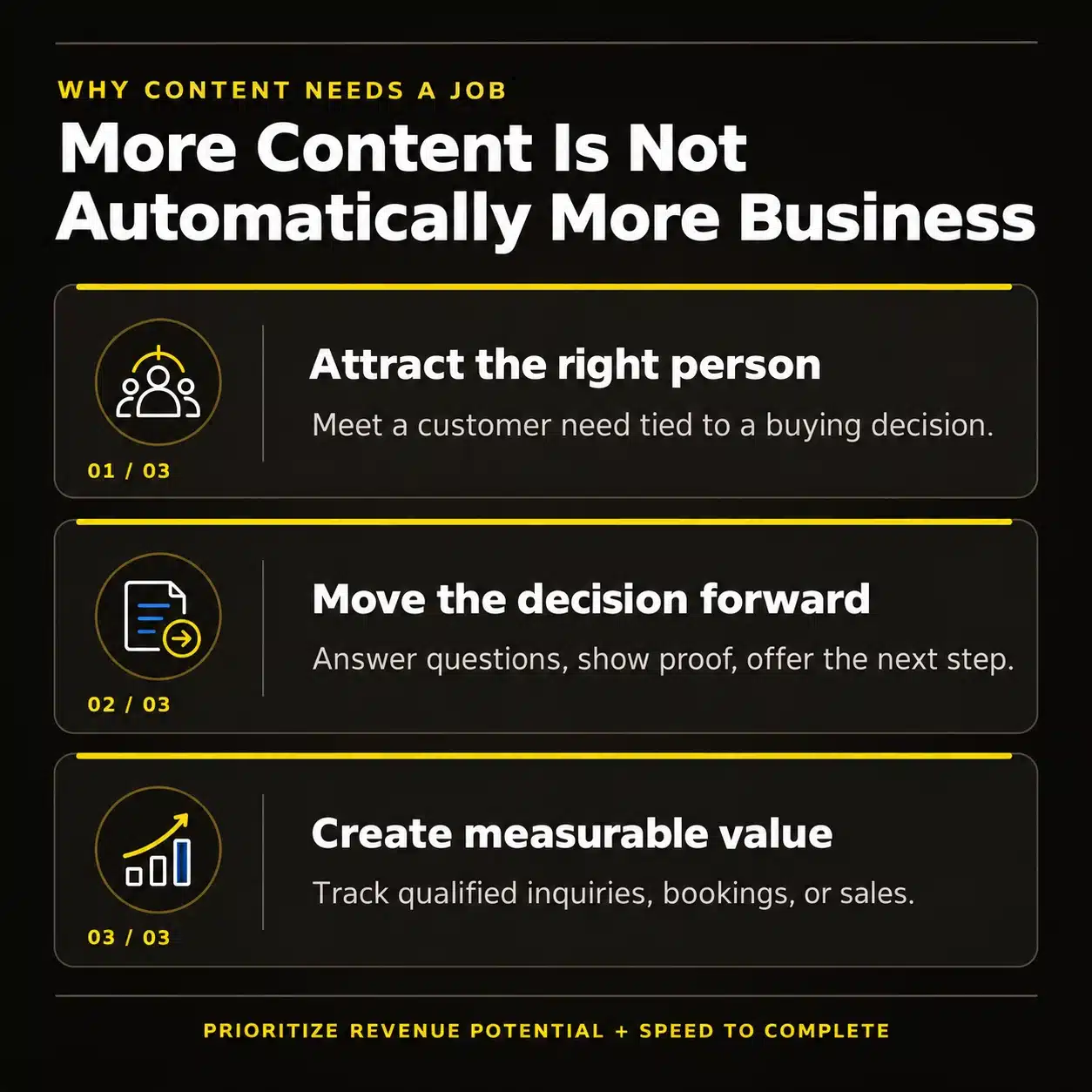
Why Content Needs a Job
Before creating another page or article, decide what it should help a customer do and what business result would make the work worthwhile.
When several content ideas compete for your time, start with the one that offers meaningful revenue potential and a practical path to completion.
Content with a job
The job changes with the customer’s need. Every asset should have a clear next step, even when an immediate sale is unlikely.
Start with one page or article idea. In six steps, define the business outcome, the customer it serves, the page’s job, the proof it needs, the visitor’s next action, and the result you will measure.
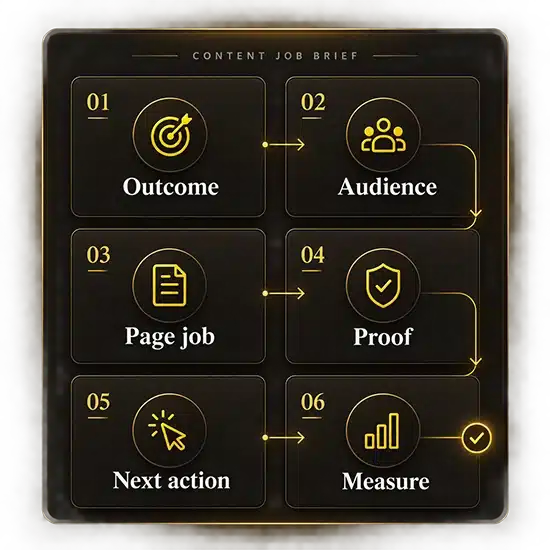
Free SEO resource · Chapter 8
Choose one page or content idea. Define its customer, job, next action, and business result before you create or improve it.
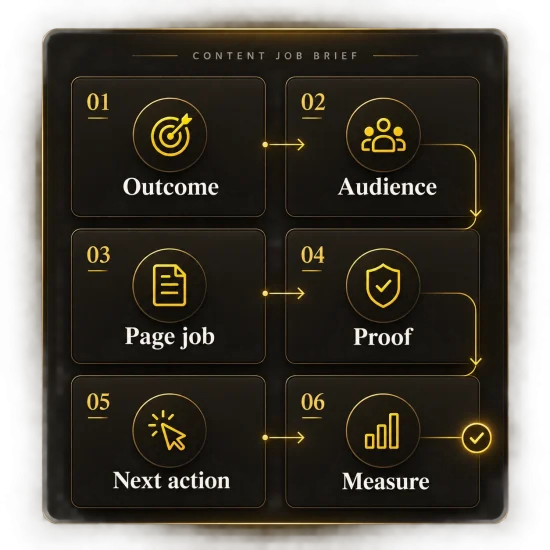
Your completed plan
Use this brief to create or improve one asset, then measure what it helps your business achieve.
In the print dialog, choose “Save as PDF” to keep a copy.
Start with one page or article idea. In six steps, define the business outcome, the customer it serves, the page’s job, the proof it needs, the visitor’s next action, and the result you will measure.
The planner turns your answers into a Content Job Brief you can print or save as a PDF.
Use your brief to make the next improvement concrete:
Clarify what a searcher needs from the page.
Examine the value of the search opportunity.
Connect the new content to relevant pages and customer paths.
Choose from 4 editions that fit how you prefer to read, reference, and work with the material. Quickest Path to ROI SEO™ is available in multiple formats, including full-color and black-and-white print editions, hardcover, paperback, and Kindle. The full-color editions provide the strongest visual experience for the book’s charts, models, and framework graphics, while the black-and-white paperback offers a more affordable print option. Kindle provides convenient digital access, and the hardcover is ideal for readers who want a premium reference copy.
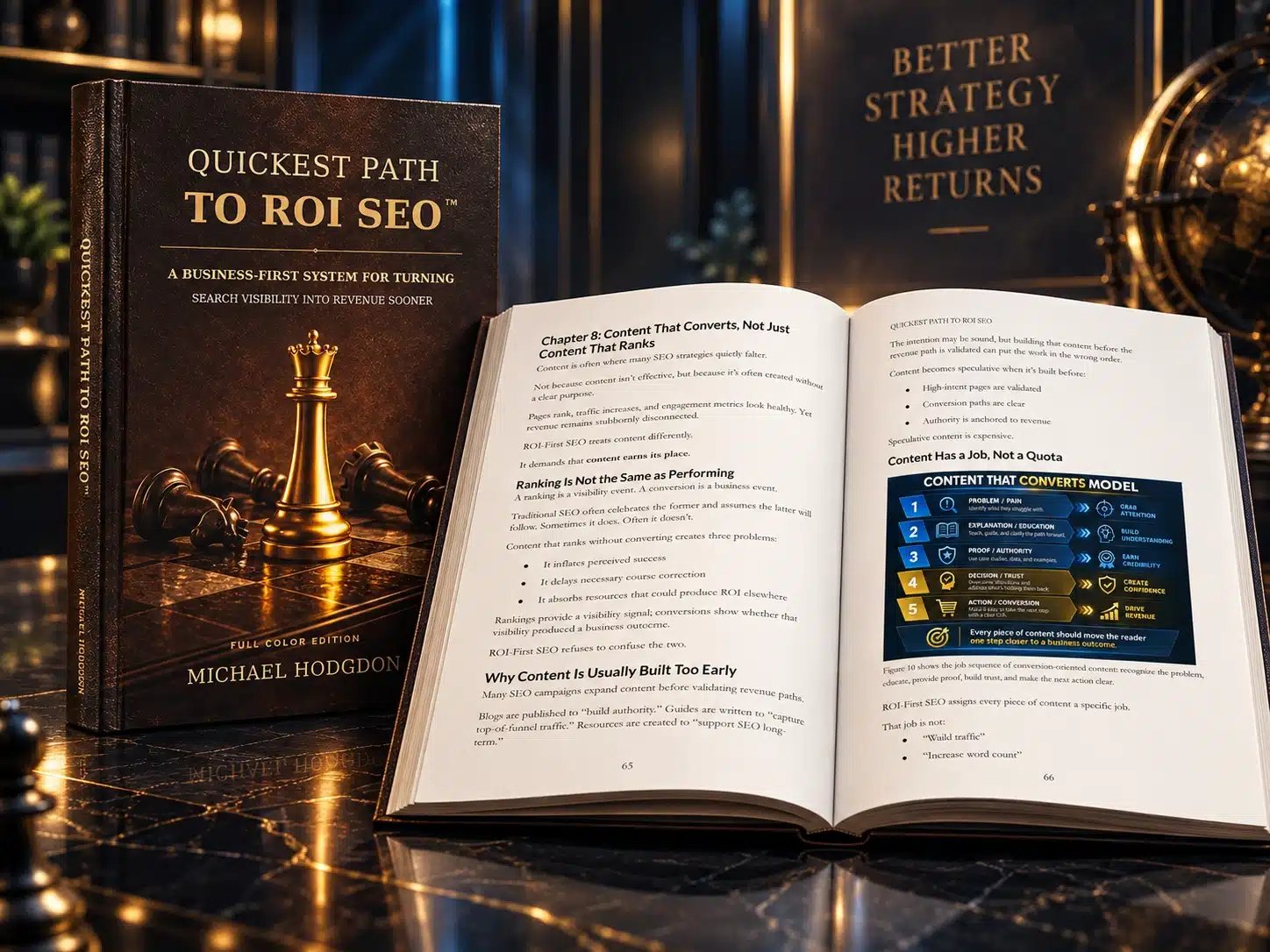
Content with a job is created with a defined business purpose, such as attracting a specific audience, answering a decision-stage question, supporting a service page, building trust, or moving a visitor toward conversion.
The goal is to avoid publishing content simply because a keyword exists or because a competitor has written about the topic.
The Quickest Path to ROI SEO™ framework asks a more useful question before content is created: what specific role should this page play in helping the business earn visibility, support a decision, or generate revenue?
A content asset should be assigned a job based on the searcher’s need, the stage of the buying process, the page’s relationship to other content, and the business outcome it should support.
A service page may help a ready buyer evaluate an offer. A case study may provide proof. An educational article may answer an earlier-stage question and direct the visitor to a more commercial page.
The Content-with-a-Job Planner helps define that role before production begins so the asset has a clear purpose, audience, and next step.
Yes. Content can rank well and attract traffic while producing little business value if it targets weak commercial intent, lacks a clear conversion path, or does not support an important product or service.
Traffic is only useful when it contributes to a larger business objective.
That is why Quickest Path to ROI SEO™ separates visibility from value. A successful content strategy should not only ask whether a page can rank, but also what happens after the visitor arrives and whether the asset supports a meaningful customer journey.
Blog content should connect to relevant service or product pages when the reader’s next logical step is to evaluate a solution, provider, product, or offer.
The connection should be useful rather than forced. An educational article may answer an early question, then point the reader toward a service page, comparison page, case study, or other asset that helps with the next decision.
The Content-with-a-Job Planner treats internal linking as part of the business path: each asset should help the reader move naturally toward the next useful step.
Content most likely to support SEO revenue is closely connected to customer questions, commercial intent, decision-making, trust, and the products or services the business actually sells.
Examples can include service pages, product pages, comparison content, case studies, pricing explanations, problem-solution articles, buying guides, and educational content that leads into a commercial page.
The strongest opportunities are usually those where search demand, customer need, business relevance, and a clear conversion path overlap.
A content planner can improve SEO ROI by helping a business prioritize content that serves a defined search intent, supports an important business goal, and connects to a measurable next action.
Without that discipline, content production can become a volume exercise: more articles, more keywords, and more traffic without a clear relationship to revenue.
The Content-with-a-Job Planner applies the Quickest Path to ROI SEO™ principle to content strategy by asking which asset can create the most useful business impact, how quickly it can be produced, and where it should lead the customer next.