CASE STUDIES
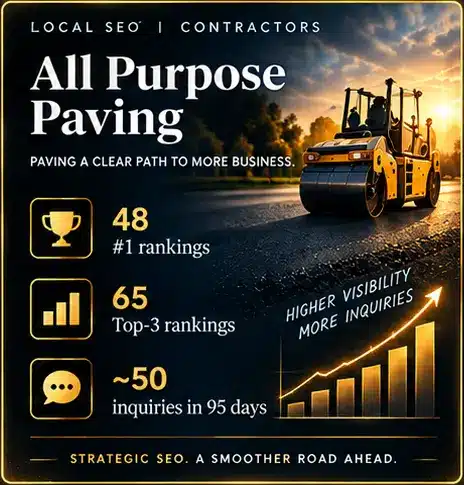
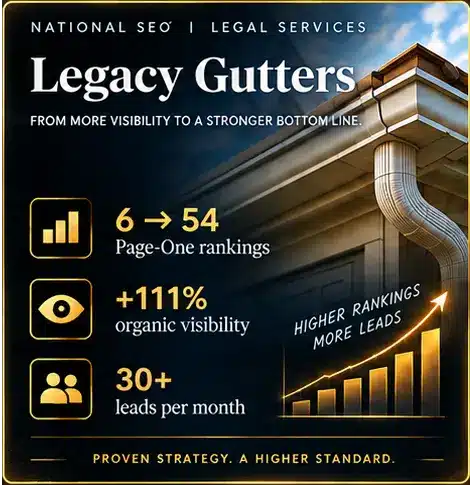
These case studies show how the Quickest Path to ROI SEO™ framework helps real businesses get measurable results faster by focusing on what matters most — revenue.
Look beyond the report
Watch a fictional agency meeting that asks a serious question about SEO results. Then explore the case studies on this page and discover how Quickest Path to ROI SEO™ by Michael Hodgdon connects priorities, implementation, and measurement to business goals.
For business owners, marketing leaders, and SEO teams focused on measurable results.

Not Theory. A Framework Built in the Real World.
The ideas in Quickest Path to ROI SEO™ were developed through decades of hands-on SEO work and refined through real campaigns across local businesses, service companies, ecommerce properties, large websites, and competitive search markets.
Throughout the book, real examples illustrate how prioritization decisions translate into measurable search and business outcomes.
The Background
I wouldn’t necessarily present this alongside the four client case studies as though it were another client. But it is extremely valuable as a “Proof Behind the Framework” section.
The manuscript explains that across a portfolio of approximately 48 clients, the baseline year had 17 cancellations. In the first full year after implementing the revenue-first approach, internally tracked client attrition fell 28%.
There’s then a second retention result. After taking responsibility for SEO at another agency, the average SEO client initially stayed approximately 5.2 months. Over the next three years, as the program became more focused on earlier measurable value, accountability and prioritization, average client duration increased to approximately 17.4 months—more than three times the original average.
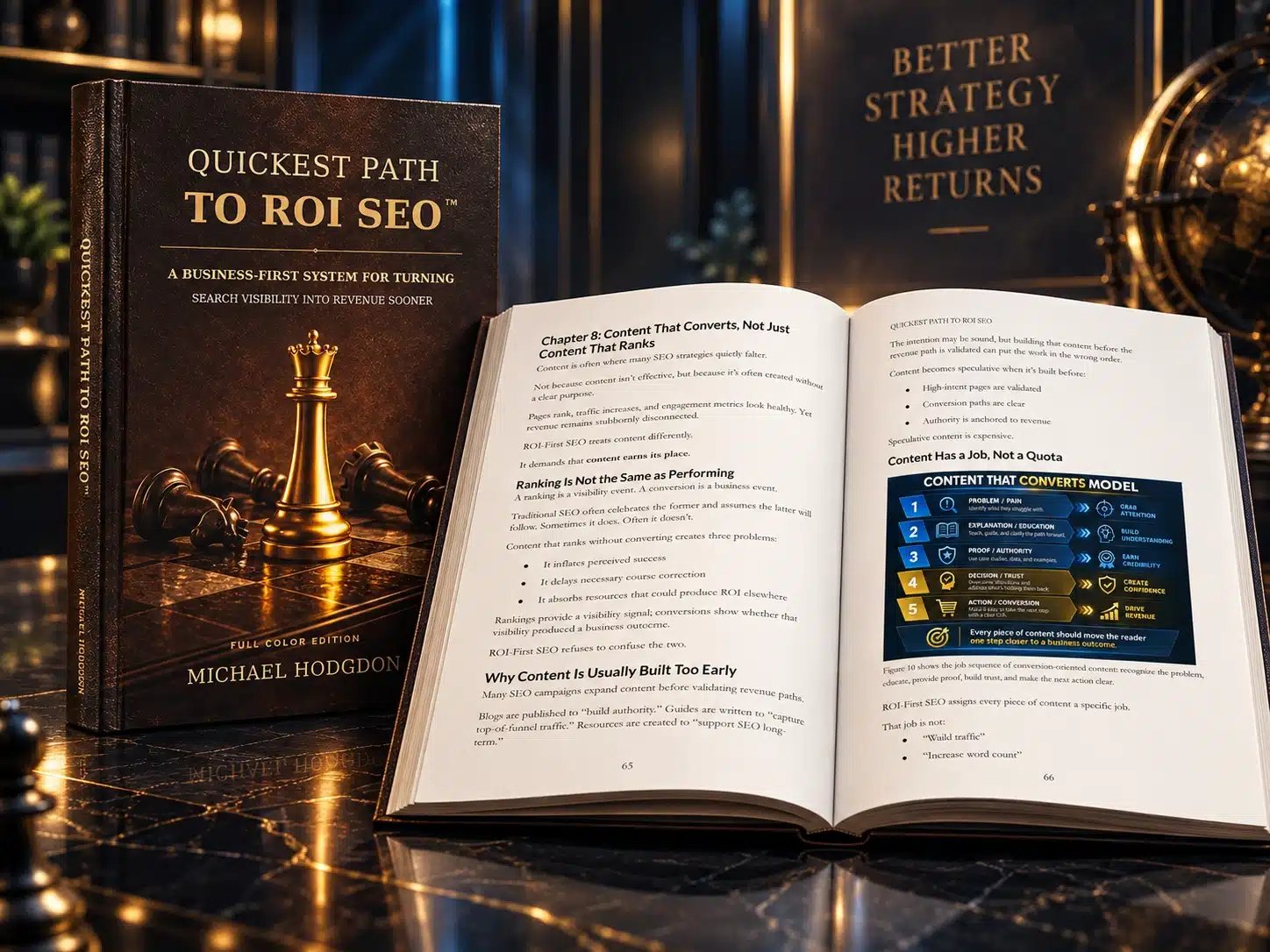
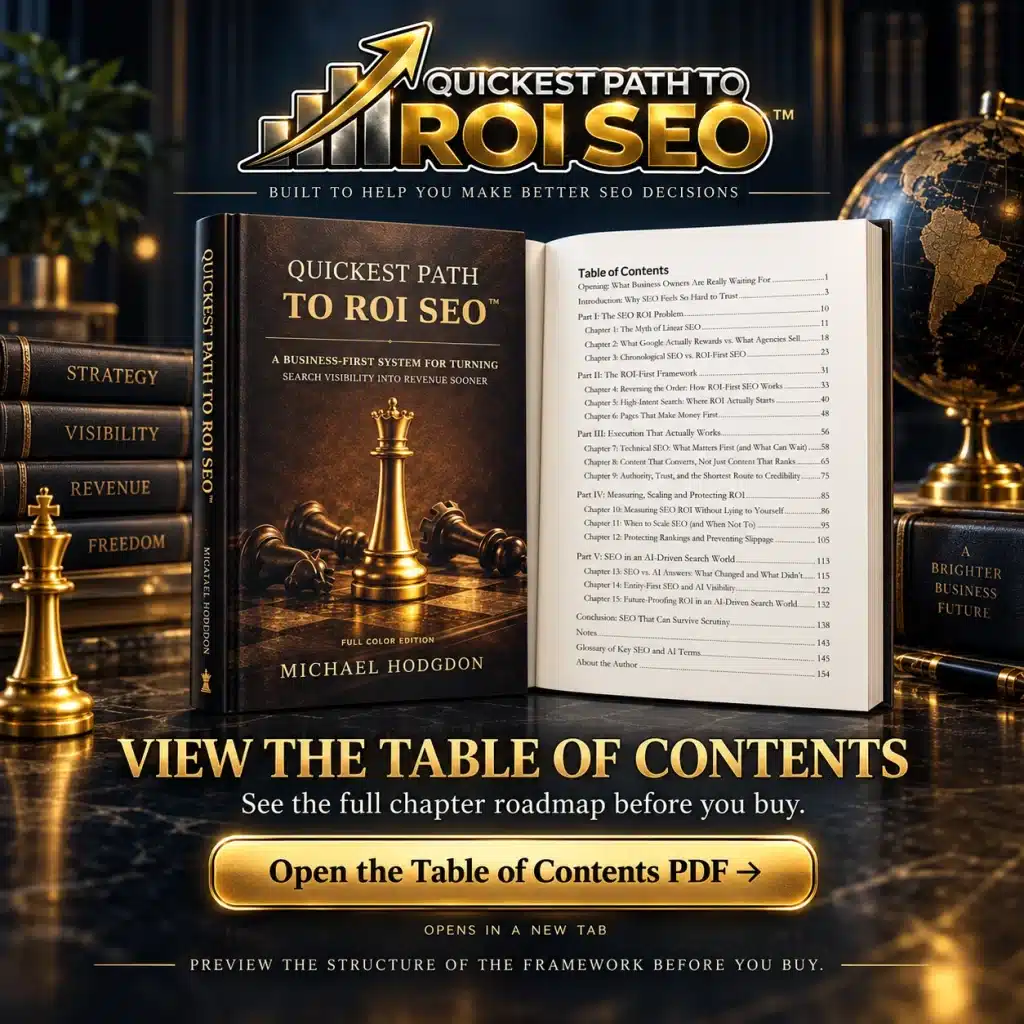
Choose from 4 editions that fit how you prefer to read, reference, and work with the material. Quickest Path to ROI SEO™ is available in multiple formats, including full-color and black-and-white print editions, hardcover, paperback, and Kindle. The full-color editions provide the strongest visual experience for the book’s charts, models, and framework graphics, while the black-and-white paperback offers a more affordable print option. Kindle provides convenient digital access, and the hardcover is ideal for readers who want a premium reference copy.